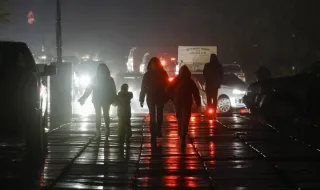
Russia has intensified its strikes on Ukraine’s energy infrastructure ahead of winter, with the aim of cutting off electricity, heating, water supplies and sewage services in major cities. According to The New York Times, Moscow has launched a campaign that uses winter conditions as a means of putting pressure on the Ukrainian population and state.
Ukrainian officials have presented European partners with an intercepted Russian document describing the use of up to 1,000 missiles, drones and aerial bombs against around 60 energy facilities. The targets include electrical facilities connecting Ukraine’s operating nuclear power plants to the national grid. If these connections are damaged, the plants could be forced to limit or halt electricity supplies.
The strikes are already affecting heating
The consequences of the attacks are being felt in the capital. According to The New York Times, disruptions to high-voltage lines supplying Kyiv left around 40 percent of apartment buildings without heating as the first severe cold set in.
“The Russians are seeking to make maximum use of the shortage of missiles for intercepting ballistic targets,” Ukrainian President Volodymyr Zelensky said, as quoted by the Associated Press. According to him, Russian forces attack specific areas for days in order to destroy energy infrastructure and make its restoration more difficult.
Zelensky said that in just one week Russia had used more than 2,300 drones, 1,590 guided aerial bombs and 15 missiles against Ukraine. Moscow, for its part, claims that the strikes are aimed at military and energy facilities.
Shortage of interceptors
Ukraine’s air defense continues to have a limited number of missiles for systems capable of stopping ballistic missiles. Jet-powered drones, which fly faster than older models and make interception more difficult, are an additional problem.
The Ukrainian Air Force reports that during concentrated attacks it manages to shoot down between 85 and 90 percent of jet-powered drones. In bad weather and during attacks from several directions, this figure may fall to 50-60 percent.
The Associated Press reports that Russia has intensified attacks on the power grid at a time when Ukrainian authorities are trying to prepare the population for the harshest winter season since the start of the full-scale war. The International Energy Agency warned that the system faces significant risks during the 2026-2027 heating season.
Restoration is lagging behind the damage
Ukrainian energy companies and repair crews are restoring damaged capacity, but the system’s capabilities remain limited. The expected capacity of 19.6 gigawatts is approximately half the pre-war level and is close to peak consumption last winter.
The new air campaign continues amid diplomatic efforts to end the conflict. Talks between Russia, Ukraine and the United States in Abu Dhabi in November did not lead to a ceasefire, and strikes on energy facilities continued after the meetings.
Sources: nytimes.com, apnews.com, iea.org