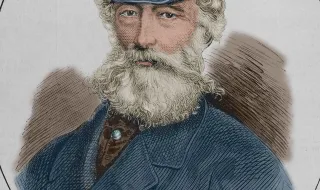
On November 20, 1811, the history began in Essen of the enterprise that, more than a century later, would become part of thyssenkrupp. Friedrich Krupp, together with the brothers Georg and Wilhelm von Kechel, founded a factory producing English cast steel and products made from it.
This was not the beginning of rapid industrial growth. Cast steel was a difficult material to produce, while the small factory faced technical problems, difficulties with sales, and serious financial obstacles. The European Route of Industrial Heritage summarizes the early period as follows:
“Technically, he succeeded, but commercially he failed and accumulated debts.”
The Beginning Was a Small Factory in Essen
In 1816, Krupp parted ways with his partners and took sole control of the enterprise. The first products were manufactured in small quantities and included tools for leatherworkers, coin dies, and coin blanks. In 1818, a larger production building was constructed, employing ten people.
Friedrich Krupp died in 1826, while the business was still in debt. His wife, Therese, continued managing it, assisted by their eldest son Alfred, who was 14 at the time. It was under the next generation that the enterprise began to expand and gradually become a major producer of steel, railway equipment, machinery, and armaments.
The Other Half of the Future Group
The history of Thyssen began later. The Thyssen company was established in 1871, and at the end of the 19th century August Thyssen developed large-scale metallurgical facilities in the Duisburg area. Thus, the two enterprises emerged as separate centers of German heavy industry.
The path toward unification passed through decades of competition, restructuring, and the pursuit of greater efficiency. In 1997, the steel operations of the two groups were brought together in Thyssen Krupp Stahl AG. On March 17, 1999, Thyssen Krupp AG was entered in the commercial register as the result of the merger between Thyssen AG and Fried. Krupp AG Hoesch-Krupp.
At its creation, the new company had around 185,000 employees worldwide. Thus, the name Krupp, which began as the designation of a small factory in Essen, became woven into a new global-scale group.
The Name Remains, the Business Changes
Today, thyssenkrupp is no longer solely a steelmaking company. The group operates in automotive technology, decarbonization technologies, trading and materials processing, steel, and marine systems. In the 2024/2025 financial year, it reported sales of €32.8 billion and 93,375 employees.
Steel remains part of the core legacy, but the modern structure is significantly broader than the factory founded in Essen in 1811. From cast steel and products for immediate needs to an international industrial group, the distance spans more than two centuries of history.
Sources: amp.dw.com