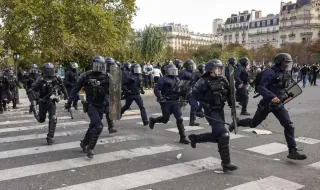
The entire specialized police unit CRS 8 was not mobilized for the national protests in France on November 17. All officers requested to see a doctor, making it impossible for the unit to take part in securing the demonstrations, BFMTV reported, citing a police source.
CRS 8 is a rapid-response unit involved in operations to restore public order. A police officer from the unit described the situation as “general dissatisfaction” and said that officers had been assigned primarily to static posts around Place de la Nation in Paris. According to him, this differs from the unit’s usual duties, which involve rapid interventions in the field.
More than 1,000 officers sought medical attention
The case involving CRS 8 is part of a broader movement among French riot-control forces. The Un1té union reported a “mass movement of exhaustion and anger” affecting several hundred police officers from nearly ten units. Later, a union representative told BFMTV that the number of officers who had sought medical consultations had exceeded 1,000, while between 15 and 20 of the approximately 65 units were affected.
Le Monde reported that nearly 1,000 officers had sought medical consultations and that close to 30 of the CRS’s 63 units were affected. According to the newspaper, the action resulted in several hundred police officers being absent on the day of the national strike and protests.
Officially, this is not a strike. French police officers are not allowed to strike, but they can see a doctor when they are not feeling well. Un1té CRS national secretary Olivier Cap stated: “The limits of endurance have been reached.” He pointed to fatigue, rising violence against law enforcement and the persistent shortage of personnel as the main reasons for the discontent.
Unions call for higher pay
Police officers have been assigned to secure protests almost every weekend in recent weeks. According to Un1té, the accumulated workload has intensified demands for better working conditions and higher pay.
The union said that the proposed increase in the risk allowance envisages a 1% rise from April 2027, followed by increases of 2% each in 2028 and 2029. Employee representatives are calling for a faster and more substantial change.
In Marseille, the police plan for the protests was changed because of the shortage of available CRS officers. The Bouches-du-Rhône prefecture declined to comment on the medical examinations and sick leave, but confirmed that security measures had been adapted.
Tensions could rise again on November 26, when the Alliance union has announced a new national day of protests for police officers.
Sources: lejdd.fr, lemonde.fr, information.tv5monde.com