Ukraine’s European allies do not believe that Vladimir Putin is ready to negotiate an end to the war, but they continue to take part in the diplomatic process amid concerns that the US could reach an independent agreement with Moscow. According to Politico, such an agreement could affect Europe’s security without the involvement of European countries.
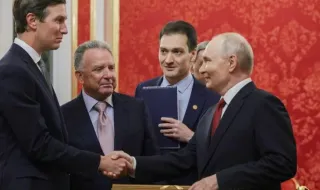
The trilateral talks between the US, Russia and Ukraine in Abu Dhabi were held with the mediation of Donald Trump’s special envoys, Steve Witkoff and Jared Kushner. They were the first direct talks between Moscow and Kyiv since February. The only concrete result of the two-day meetings was a commitment to exchange prisoners of war, the details of which have yet to be finalised.
European officials who followed the talks claim that the Russian delegation showed no readiness to make significant concessions. No date has yet been set for the next round of direct negotiations.
European Scepticism Towards Moscow
“Putin is not interested in a ceasefire or peace at the moment. He believes he can gain more by continuing the war than by agreeing to a truce. This is the main problem,” says Fredrik Wesslau, a senior fellow at the European Council on Foreign Relations.
French President Emmanuel Macron said on 14 November that the latest talks with the American mediators had demonstrated Putin’s lack of willingness to negotiate. According to Macron, the Russian president is counting on forcing Ukraine to capitulate by intensifying strikes against the civilian population and energy infrastructure as winter approaches.
Representatives of France, Germany, the United Kingdom, Italy, the European Council and the European Commission travelled to Abu Dhabi but did not take part directly in the talks between the Russian and Ukrainian delegations and the American mediators. After the meetings, Witkoff and Kushner visited Moscow to secure Putin’s agreement to include European representatives in the next round. According to the American side, the Russian president accepted the proposal, but the Kremlin subsequently cast doubt on this interpretation.
The Dispute Over European Security
European leaders have agreed that five countries and representatives of European Union institutions will take part in future talks with Russia if they are invited. The British government emphasises that Ukraine has repeatedly demonstrated its readiness for peace, while Russia has rejected proposals for a full or partial ceasefire.
European capitals are particularly concerned by Russia’s insistence that the peace agreement should include a review of the overall security architecture in Europe, including NATO’s expansion and military presence.
“The deployment of NATO forces in member states, for example, is not an issue that we should discuss with Russia,” Norwegian Foreign Minister Espen Barth Eide told Politico.The American mediators believe that Russia’s concerns about Europe’s future security can be discussed as part of the peace process. European representatives accept the possibility of such a discussion but insist that ending the war must be the first step.
Further tension is being caused by the forthcoming meeting between Trump, Putin and Chinese President Xi Jinping. European representatives fear that the three leaders could discuss the future of European security without the participation of the European countries themselves.
According to a German diplomat quoted by Politico, Putin is taking part in the negotiations because he needs an agreement with Trump, but Moscow’s actual goal remains military victory. Thus, Kyiv’s European allies are trying both to support American diplomacy and to prevent a decision on the security of the continent from being made without their consent.
Sources: news.bg