Ukrainian forces have liberated 204 sq km and 14 settlements in the northern and northeastern parts of Kharkiv region as part of Operation “Bear Trap”. The announcement was published by a Ukrainian regiment on November 20, and the data were analyzed in a report by the Institute for the Study of War (ISW).
The liberated villages are located north and northeast of Velykyi Burluk. The list includes Komisарove, Shyrokе, Cherne, Nефедivka, Shevyakivka, Vodiane, Dovhenke, Zarubynka, Ustynivka, Ivashkyne, Anyskine, Vilkhโuvatka, Dovzhanka and Chuhunivka. According to the published map, Russian forces continue to control Ozerne, Bereznyky, Artilne and Rublene.
The operation continues
The commander of the 475th Assault Regiment of the Armed Forces of Ukraine, Lieutenant Colonel Oleksandr Nastenko, told the Ukrainian service of the BBC that the military had maintained strict operational security. According to him, the operation is not over, and Ukrainian units continue to clear individual settlements near the border.
“The situation was close to critical,” Ukrainian military sources told the BBC after Russian forces entered the area at the end of June. According to ISW, the Russian command had planned to close an encirclement near Prykolotne by advancing simultaneously from the east through Artilne and Vilkhоuvatka and from the west through Vovchansk and Bilyi Kolodiaz.
Russian units crossed the border near Artilne at the end of June 2026 and advanced towards Prykolotne. ISW, however, notes that it has found no confirmation of a successful encirclement of Ukrainian forces, despite claims by the Russian Ministry of Defence and Chief of the General Staff Valery Gerasimov in September and October.
Feint attack with tanks and drones
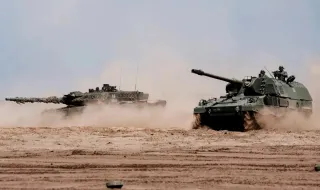
According to ISW’s preliminary assessment, Ukrainian forces used armoured vehicles to draw Russian reserves towards the wrong sector. T-80 tanks and M1 Abrams tanks attacked Vilkhоuvatka, creating the impression that the main strike would be carried out there.
The Russian command transferred reserves to the area, while Ukrainian drone operators attacked the concentrated units. The Ukrainian forces then launched actions along other axes. Some of the attacks also involved tanks and Bradley infantry fighting vehicles.
Another element of the operation was networked systems with repeaters, which Ukrainian forces used to remotely mine Russian ground supply routes. ISW notes that these systems enabled roads to be mined at a distance of approximately 30 kilometres from the front line.
Sources: unian.net