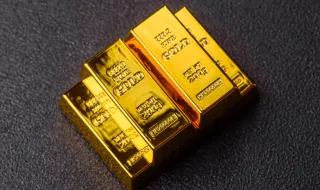
The price of gold fell below $3,700 per troy ounce during the week, around one-third below the all-time high of $5,589.38 reached on January 28, 2026. The precious metal thus fell to its lowest level since September 2025, after setting 53 records last year.
According to analysts, the reason is a change in gold’s role in financial markets. “Gold can behave like a commodity or like a currency,” Suki Cooper, head of commodities at Standard Chartered, told CNBC. In her view, it is the currency factor that is currently putting pressure on the price.
Interest Rates and the Dollar Have Changed the Market
Gold’s rise in 2025 was supported by strong physical demand, lower interest rates, a weakening dollar and a record inflow of $89 billion into exchange-traded funds backed by gold. The assets of these funds have exceeded 4,000 tons, with a total value of $559 billion.
After the January peak, the market environment reversed. Sales linked to tensions in the Middle East turned gold from a traditional safe haven into a source of liquidity. Investors began selling the metal to raise cash, while market attention shifted to the Federal Reserve’s policy.
Higher U.S. interest rates increase yields on government bonds and make the dollar more attractive. This raises the opportunity cost of holding gold, which pays no interest. With money-market fund yields at 4% to 5%, cash, stocks and bonds are becoming more competitive alternatives for investors.
Central Banks Remain Buyers
The market is divided between individual investors and central banks. While retail buyers are turning away from non-interest-bearing assets such as gold and bitcoin, central banks continue to buy the metal. Poland, which is a NATO member, is among them. However, total purchase volumes are 7% lower year on year.
Financial adviser Evan Mills of Scholar Financial Advising describes gold as insurance rather than a growth engine in an investment portfolio. In his view, buying such protection is less attractive when its price has already reached extremely high levels.
Is Another Decline Expected?
Mark Chandler, chief market strategist at Bannockburn Capital Markets, expects the price to fall to $3,500-$3,600 per troy ounce. He notes that the charts still do not show a clear signal of a reversal in the downward trend. Despite the decline, the metal remains significantly above its ten-year average price of $2,127.
Other analysts are more cautious in their long-term assessments. Amy Gower of Morgan Stanley and former U.S. Mint director Philip Diehl believe that the main factors supporting gold have not disappeared. According to Diehl, the current correction is linked to the shock from the war in the Middle East and sharp changes in U.S. trade policy. He sees the possibility of another rise in 2027 if oil prices and interest rates normalize.
Sources: money.bg