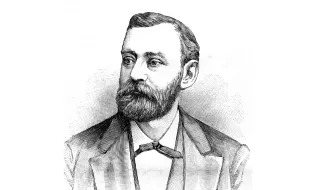
At the end of November 1895, in Paris, Alfred Nobel made a decision that changed the way the world honors achievements in science, literature and peacemaking. The Swedish engineer, chemist and entrepreneur signed his final will at the Swedish-Norwegian Club, directing most of his fortune toward the creation of five international awards.
Nobel ordered that the capital be invested in safe securities, with the proceeds distributed annually. In his will, he wrote that the awards should go to those who „during the preceding year have conferred the greatest benefit to humankind“.
Five fields and one condition
The original concept covered physics, chemistry, physiology or medicine, literature and peace. For physics and chemistry, Nobel designated the Swedish Academy of Sciences; for physiology or medicine – the Karolinska Institute in Stockholm; and for literature – the Swedish Academy. The Peace Prize was to be awarded by a committee of five people elected by the Norwegian parliament.
The text also set out another important rule: nationality must not influence the choice. „The most worthy person shall receive the prize, whether they are Scandinavian or not“, Nobel's will stated.
The estate earmarked for the fund was valued at around 33 million Swedish kronor – an enormous sum for the end of the 19th century. Nobel amassed his fortune through patents, industrial enterprises and the production of explosives. His best-known invention was dynamite, patented in 1867.
The will faces resistance
Alfred Nobel died on December 10, 1896, at his villa in San Remo, Italy. After his death, it became clear that almost all of his property was intended for the awards rather than for direct inheritance by his relatives. This sparked disputes and delayed the execution of the will.
The executors of his wishes, Ragnar Sohlman and Rudolf Lilljequist, held lengthy negotiations with the heirs and the institutions that were to present the awards. Some of the funds turned out to be invested in various countries, further complicating their transfer.
The foundation lays the groundwork
On June 29, 1900, the Nobel Foundation was established to take over the management of the funds and the administrative organization of the awards. Thus, five years after the will was signed, the necessary foundation for its implementation had been established.
The first Nobel Prizes were awarded in 1901, with the ceremonies held on December 10 – the anniversary of Nobel's death. The awards for physics, chemistry, physiology or medicine, and literature were presented in Stockholm, while the Nobel Peace Prize was presented in Oslo.
In 1968, the Prize in Economic Sciences in Memory of Alfred Nobel was added to the five categories. It was established by Sweden's central bank and is not part of the original will. The five awards envisioned by Nobel in 1895, however, remain the core of the system that still bears his name today.
Sources: apnews.com, theatlantic.com