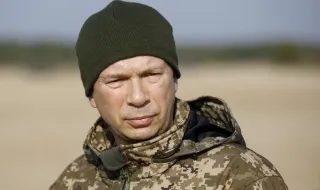
States must prepare for war in peacetime in order to prevent future conflicts. This was stated by former Commander-in-Chief of the Armed Forces of Ukraine Oleksandr Syrskyi during the Halifax International Security Forum, UNIAN reported.
According to Syrskyi, Russia’s full-scale war against Ukraine has changed the understanding of effective defence. He outlined three lessons that, in his view, other countries should draw from the conflict.
Preparation Must Begin in Peacetime
The first lesson concerns readiness for defence. Syrskyi warned that even where war appears impossible, political decisions can quickly change the situation.
In his words, Ukrainian servicemen who are deterring Russian aggression are also defending peace in Europe. He described readiness for defence as one of the conditions for deterring an aggressor.
Call for Changes to Collective Security
The second lesson, according to the former commander-in-chief, is that the international collective security system needs changes. Syrskyi pointed out that the existing mechanisms had failed to prevent Russia’s full-scale invasion and had not brought the war to an end.
He stressed that prolonged defence requires large numbers of people, weapons and resources. In his view, many countries would struggle to withstand such a burden on their own, which is why mechanisms are needed to allow partners to act together and in time.
Armies Must Adapt More Quickly
The third lesson concerns the development of the armed forces. Syrskyi said that weapons from different generations are being used simultaneously in the war, while new technologies are rapidly changing the nature of combat operations.
Therefore, in his words, armies must develop their own technologies, deploy them quickly and adapt the training of their troops to the new conditions. Syrskyi concluded that the advantage goes to whoever learns and adapts more quickly.
In its report, UNIAN also recalled other assessments by Syrskyi. He said that Ukraine’s Defence Forces had succeeded in breaking the offensive potential of the Russian army, but the prospect of an end to the war depended not only on the resilience of Ukrainian society, but also on the support of Kyiv’s partners and allies.
Syrskyi also believes that, at present, there are no drones or robots capable of completely replacing ordinary soldiers.
Sources: unian.net