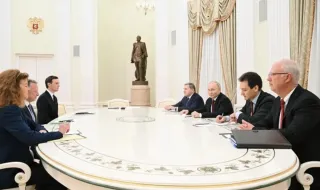
Restoring relations between Russia and Europe would be the “grand prize” of negotiations to end the war in Ukraine, said Jared Kushner, special envoy of US President Donald Trump. Washington is seeking to link talks on Ukraine’s future with a broader agreement on the security of the European continent.
Kushner and US envoy Steve Witkoff held talks with Russian President Vladimir Putin and Ukrainian President Volodymyr Zelensky after the first round of US-mediated negotiations between Moscow and Kyiv in Abu Dhabi. The meeting did not produce a breakthrough on ending the war, but an agreement was announced on a major prisoner exchange and preparations for another round of talks.
Washington wants Europe at the table
The US administration is insisting that European countries participate directly in future negotiations. Kushner said that the United States is facilitating direct dialogue between Moscow and its European partners and is preparing the agenda for the next round of multilateral talks.
“Security guarantees for Ukraine cannot be finalised in isolation from the post-war security architecture in Europe. The two things must be considered together,” Kushner wrote, quoted by Euronews. He said that one possible option would be a guarantee modelled on Article 5 of the NATO treaty, under which an attack against one ally is considered an attack against all.
Kushner also said that Russia had begun to accept the idea of such a model for Ukraine, but stressed that the guarantees must be part of a broader security package. According to him, President Trump wants any agreement to be reached in close coordination with Europe and Ukraine, rather than unilaterally by the United States.
Europe insists on a different sequence
European leaders do not accept the sequence proposed by Washington. They insist that a ceasefire must be agreed first, and only then should talks begin on the future security architecture.
“Once there is a ceasefire, discussions can then be held on the security architecture in Europe,” said European Commission spokesperson Paula Pinho. She clarified that these talks should be conducted with the full participation of the countries of the European Union and NATO allies.
German Chancellor Friedrich Merz also defended this position during the meeting of the “Coalition of the Willing” in Berlin. According to him, “there must first be peace in Ukraine, and then agreements on Euro-Atlantic security.”
Moscow leaves the issue open
Russian President Vladimir Putin said that Moscow was not opposed to Europe’s participation in the negotiations, but wanted to know what proposals it would put forward. The Kremlin, however, has still not definitively confirmed that it accepts European representatives as full-fledged participants in the future negotiating format.
Thus, the main dispute remains not only about the content of a possible agreement, but also about the order in which the cessation of hostilities, guarantees for Ukraine and relations between Russia and Europe should be discussed. The date and composition of the next round of multilateral negotiations have yet to be announced.
Sources: euronews.com, apnews.com, cbsnews.com