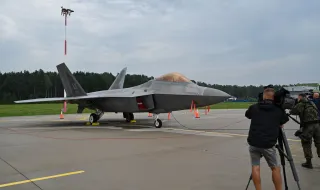
Poland plans to create a no-fly zone in the eastern part of the country, near the border with Ukraine. It will cover an area extending several dozen kilometres inland from the border and is intended to give the military an additional tool when assessing airborne threats.
Deputy Minister of National Defence Cezary Tomczyk said that the government wants the relevant order to enter into force at the end of December 2026 or the beginning of January 2027. According to him, the zone will be relatively small and will be located along the country’s eastern border.
How airborne objects will be assessed
At the request of the operational commander of the Polish Armed Forces, General Ireneusz Nowak, a procedure for the so-called positive identification of airborne objects has already been introduced.
Under the procedure, the pilot must collect and analyse several types of information, including radar data, information from allies, flight altitude and speed. The aim is to establish what the object is before a decision is made on further action.
“This is an additional factor for the military,” Tomczyk said, explaining the role of the planned zone.According to the deputy minister, the presence of a no-fly zone will facilitate the practical application of the identification procedure. If a fighter jet detects an aircraft entering Polish airspace from the direction of Ukraine, flying at a certain altitude and at a designated speed, and entering the zone, this could constitute grounds for destroying it. The presence of a radar image will also be an important element.
The plan does not mean that every object entering the zone will automatically be shot down. The decision will depend on the data collected and the assessment of the specific airborne threat.
The reason for the change
The introduction of the new rules follows an incident on 20 November, when three Russian airborne objects entered Polish territory during a massive Russian attack on Ukraine.
At the time, Defence Minister Władysław Kosiniak-Kamysz said that there were no casualties and that no reports of infrastructure damage had been received. The Polish military did not open fire because, according to the command, all the necessary conditions for doing so had not been met.
The forthcoming order is expected to define the zone’s operating rules and give Polish forces a clearer framework for taking action against unidentified airborne objects near the eastern border.
Sources: obozrevatel.com, gazetaprawna.pl