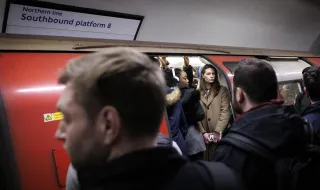
Drivers from the Rail, Maritime and Transport Union (RMT) began a 24-hour strike on the London Underground over a dispute with Transport for London (TfL) management regarding the introduction of a four-day working week. The protest began at 12:00 local time and will cause disruption to train services in the British capital.
According to TfL, normal services are expected to continue until around 10:00, after which the number of trains will gradually decrease. From midday, most lines will operate, but with disruptions. There will be no service on the Circle and Piccadilly lines throughout the day, while services on the Waterloo & City line will be suspended in the afternoon.
On Friday, the Underground will start operating later than usual. Disruptions on all lines are expected to continue until around midday, with further difficulties possible during the afternoon and evening. TfL expects normal service to be restored at around 18:00.
The dispute is over the four-day working week
TfL has presented a revised proposal for drivers to voluntarily switch to a four-day working week. It also includes the option for employees to retain their five-day week, while guaranteeing that they remain at the same depot.
The Aslef union supports the proposal, and its members are expected to work normally. London Underground’s director of customer service, Nick Dent, rejected RMT’s claims that drivers would spend more time operating trains, which could increase fatigue.
“We have made significant changes to our proposals and asked the RMT to put them to its members. The proposals will lead to a more reliable service and improve work-life balance,” Nick Dent told PA Media.RMT General Secretary Eddie Dempsey rejected this explanation. According to him, the proposal means “fewer drivers taking on more work”, while management gains greater flexibility at the expense of employees.
Seven more strikes are planned
The next 24-hour strikes are scheduled for 17 and 19 December, 4 and 6 January, and 17, 23 and 25 February. This means the protests will also affect the period of increased Christmas shopping, as well as the beginning of the new year.
Ruth Duston, head of the London Heritage Quarter business organisation, which represents 7,000 businesses in areas including Victoria, Westminster and Whitehall, called for negotiations to resume.
“This disruption will be extremely damaging to businesses during such an important trading period, and negotiations must resume to limit the economic impact on businesses in the capital,” Ruth Duston said.
Sources: bta.bg, lbc.co.uk, the-independent.com