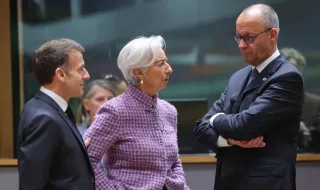
The leaders of the 27 European Union member states failed to reach an agreement on the bloc’s next seven-year budget. The talks in Brussels lasted more than 12 hours, but disagreements over the size of the budget, the allocation of funds and financing for Ukraine remained unresolved.
The second day of the meeting, scheduled for Friday, 27 November, was cancelled. German Chancellor Friedrich Merz said the leaders would seek a compromise at the next meeting of the European Council on 17 and 18 December. According to him, the goal remains to reach an agreement by the end of the year.
“The budget must be modernised and reduced if we want to reach a deal,” Dutch Prime Minister Rob Jetten said.Dispute over the size and priorities
Germany and other countries that contribute more to the budget than they receive from it are calling for a stricter financial framework. According to EUobserver, the compromise proposal by European Council President António Costa already envisages a reduction of €204 billion, or 10.3%, compared with the European Commission’s initial proposal. Berlin, however, believes the cut should be even larger.
France and Italy are among the countries advocating greater funding for agriculture and regional cohesion. These two areas each account for approximately one-third of the budget and are of particular importance to poorer regions in the EU.
Emmanuel Macron described the proposed €204 billion reduction as a “strategic mistake”. The French president warned that cutting the budget would reduce European public investment compared with that of China and the United States, and that Paris would not support further cuts.
Ukraine complicates the negotiations
Alongside the budget, the leaders are also discussing financial support for Ukraine in 2027. The agenda includes a loan of around €45 billion for Kyiv’s economic and military needs. Friedrich Merz insists that all EU countries should make a collective commitment to the financing.
Bulgaria, the Czech Republic, Hungary and Slovakia oppose the use of common funds for military aid to Ukraine. This further divides the countries that want the issue to be considered separately from the long-term budget.
The European Council must reach unanimity on the multiannual financial framework. The current budget expires at the end of 2027, while the new one must set the funding for agriculture, infrastructure, security, green energy and support for the regions from 2028 to 2034.
De Cos heads to the ECB at a tense moment
At the same meeting, European leaders proposed Spaniard Pablo Hernández de Cos as the next president of the European Central Bank. The final decision will be taken after consultations with the European Parliament and the ECB Governing Council.
De Cos is a former governor of the Bank of Spain and head of the Bank for International Settlements. According to Reuters, he has experience managing Spain’s banking crisis, the pandemic and the inflation shock following 2022.
He is due to succeed Christine Lagarde on 7 February 2027, if his nomination is confirmed. The choice comes against a backdrop of elevated inflation, higher interest rates and concerns about financial strain surrounding France. The ECB has no mandate to protect individual countries from the consequences of their own fiscal policies, but it can purchase bonds in the event of unjustified or disorderly market movements.
Sources: apnews.com, investing.com, euobserver.com