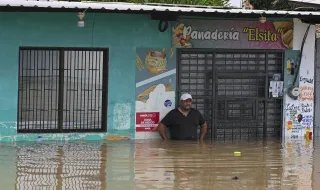
At least 34 people have died in Ecuador following torrential rains and floods linked to the El Niño climate phenomenon. The disaster also affected Peru, where streets and residential areas in the northern city of Piura have been flooded. Both countries have declared a state of national emergency.
Initial information indicates that around 47,000 people have been affected by the rainfall in Ecuador and Peru. However, a more recent Ecuadorian government report puts the number of people affected or impacted by the rains and floods at 126,935. The discrepancy is likely due to differences in the timing and scope of the assessment, so the final figure remains subject to revision.
In the western Ecuadorian city of Manta, two rivers have burst their banks. Residents have made their way through chest-deep water, while others have used mattresses to reach safer locations.
Ecuador’s National Secretariat for Risk Management reports that rainfall since the end of August has caused hundreds of dangerous incidents across the country, including floods, landslides and flash floods. The areas along the Pacific coast have been the hardest hit.
Thousands of families affected in Piura
In Piura, torrential rain continued for about 12 hours and flooded streets, homes and public buildings. The preliminary estimate is that around 2,000 families have been affected.
“Around 2,000 families in Piura have been affected by the rains,” said Luis Vasquez, head of Peru’s National Institute of Civil Defence.
Peruvian authorities delivered five tonnes of humanitarian aid by helicopter. President Keiko Fujimori postponed her trip to Colombia and said she would visit the affected areas.
Strong El Niño raises the risk in 2027
El Niño is associated with rising sea surface temperatures in the eastern and central equatorial Pacific Ocean. This alters atmospheric circulation and can lead to more intense rainfall in some regions and drought in others.
The World Meteorological Organization and the US National Oceanic and Atmospheric Administration expect the phenomenon to remain strong during the winter of 2026–2027. Climatologists warn that the combination of El Niño and ongoing global warming could make 2027 the hottest year on record.