Negotiations between Germany and Ukraine on a drone production agreement are progressing with difficulty because of customs duties and taxation on the Ukrainian side. This is reported by Welt am Sonntag, citing internal documents from the German Ministry of Defence.
The documents define customs duties and double taxation as “red lines” for Berlin. The dispute concerns the conditions under which German companies will participate in production and deliveries related to Ukraine’s defence industry.
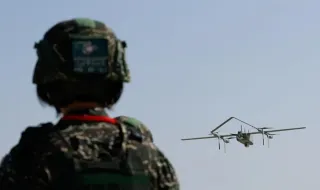
The issue has come to the fore just days after the signing of a separate agreement on the joint production of Ukrainian reconnaissance drones in Germany. On 24 November, Ukrainian Defence Minister Yevhen Khmara and his German counterpart Boris Pistorius signed an implementing agreement providing for a Ukrainian and a German company to jointly establish a venture on German territory.
“Through this cooperation, we are ultimately strengthening our capabilities and the Bundeswehr’s defence capability, and consequently that of NATO,” Pistorius said, as quoted by German public broadcaster ARD.
A Series of Agreements
Berlin and Kyiv expanded their military-industrial cooperation in 2026. On 14 April, the two countries signed documents on the joint production of long- and medium-range combat drones, including the Anubis and Seth-X systems.
In July, Pistorius and then Ukrainian Defence Minister Mykhailo Fedorov signed an agreement on the joint production of Bars drones. According to German media reports, these aircraft can reach targets up to 800 kilometres away.
These agreements are part of Ukraine’s effort to relocate some of its production outside the area of Russian attacks while also gaining access to European financing, production facilities and component supplies.
The Tax Dispute Remains
At the beginning of 2026, Ukraine introduced exemptions for the import of military and dual-use goods. For a number of defence-related goods, including drones and components, duty-free and VAT-exempt imports are provided for at least until the end of 2027.
At the same time, Ukrainian manufacturers are warning of possible export fees. In an article about a drone manufacturer, the German publication taz notes that finished drones could be subject to 20% duties, while those on components could reach 30%. According to a representative of Ukraine’s defence industry, this could reduce the price advantage of local companies.
On 5 November, the German Bundestag approved an agreement with Ukraine to avoid double taxation on income. However, documents cited by Welt am Sonntag make clear that questions concerning the customs regime and practical taxation for specific production projects remain unresolved.
No deadline for concluding the negotiations has been publicly announced. The next stage is to clarify the conditions under which German and Ukrainian companies will operate, so that the new production projects are not burdened with additional costs or double taxation.
Sources: tagesschau.de, taz.de, welt.de