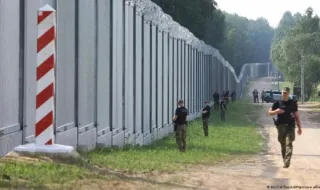
Poland has extended the operation of the buffer zone along its border with Belarus by another 90 days. The restrictions will remain in force from November 30, 2026, to February 27, 2027, the Polish Ministry of the Interior and Administration announced.
The zone was introduced on June 13, 2024, and the latest extension is the 11th in a row. It covers more than 78 kilometers of the border. Along approximately 59 kilometers, the ban on staying applies to a strip 200 meters wide, while in other sections the protected zone extends approximately 2 and 4 kilometers.
„Maintaining the zone provides the services with conditions for effectively guarding the eastern border,“ the Polish Interior Ministry said. According to the ministry, the restriction facilitates the work of border officers and makes illegal crossings more difficult.
482 attempts to cross illegally
From the beginning of the year through November 24, the Polish Border Guard registered 482 attempts to cross the border illegally. During the same period in 2025, their number was nearly 29,400, which represents a decline of more than 98 percent.
Most of the attempts registered this year took place in sections included in the buffer zone. Polish authorities, however, point out that the lower pressure does not mean the problem is over. According to the Ministry of the Interior and Administration, activity is shifting toward the borders with Lithuania and Latvia.
Nearly 3 billion zlotys for border security
Warsaw says it has invested nearly 3 billion zlotys, or around $740 million, in strengthening the border. The measures include building a second line of fencing, observation towers, reinforcing the existing physical barrier, and creating a drone detection system.
Polish authorities have also extended restrictions on submitting applications for international protection at the border with Belarus. The decision is part of a broader package of measures related to migration pressure along the European Union’s eastern border.
The crisis along the Polish-Belarusian border began to deepen in 2021, when Warsaw accused the Belarusian authorities of encouraging the arrival of migrants from the Middle East and Africa in order to put pressure on the EU. Moscow was also identified by Polish authorities as a party linked to the crisis. Belarus rejects these accusations, while Alexander Lukashenko has stated that his country does not use migrants for political pressure, although he has acknowledged that individual Belarusian servicemen may have helped them for humanitarian reasons.
Sources: rbc.ru, pap.pl, apnews.com