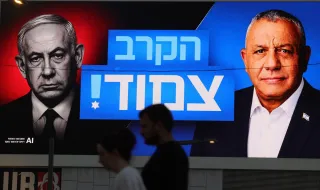
Talks between Israeli Prime Minister Benjamin Netanyahu and the leader of the centrist Yashar party, Gadi Eisenkot, ended without an agreement on forming a national unity government. The meeting took place a day after Netanyahu proposed that Eisenkot take the prime minister’s post first in a possible rotating government.
“The meeting took place in a serious atmosphere, with both sides making efforts to overcome their deep differences,” a joint statement by Likud and Yashar said. However, the document contained no information about progress made or about scheduling further talks.
According to Israeli media, Eisenkot said he would not abandon his political partners in order to form a government with Netanyahu. He invited the prime minister and Likud to join a coalition led by him. The negotiating teams of the two parties also canceled a previously scheduled meeting.
Deadline of December 6
Netanyahu’s proposal for a rotating term was made as the deadline for forming a government approached. Eisenkot must present a cabinet by December 6, after President Isaac Herzog tasked him with forming one because he had the support of 67 of the Knesset’s 120 members.
The elections did not give either of the two political camps an outright majority. Therefore, Eisenkot is holding parallel talks with parties that could provide the necessary support, but there are serious differences among them regarding religion, security and the participation of Arab factions in the government.
In recent days, the leader of Yashar has made progress in talks with an ultra-Orthodox Jewish party and an Israeli-Arab political formation. According to reports in the Israeli media, his bloc is also considering the option of a minority government if it fails to secure a stable parliamentary majority.
Netanyahu seeks a way out of the political deadlock
The talks between the two are an attempt to prevent a further deepening of the political crisis. Netanyahu proposed a rotating model under which the two would govern successively, but the meeting did not lead to any change in Eisenkot’s position.
Following the failure of the meeting, the main question remains whether Eisenkot will succeed in forming a government by December 6. If he fails to secure the necessary support, the political process could move to the next stage, with no new cabinet agreed upon for the time being.
Sources: bta.bg, apnews.com, timesofisrael.com