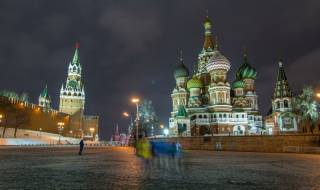
On July 27, 1147, the city of Moscow was founded.
Its first mention dates back to 1147, when, according to the chronicles, princes Yuri Dolgoruky and Svetoslav Olgovich met there. This year is conventionally accepted as the year of the city's foundation. At that time, Moscow was an insignificant town in a remote region with a predominantly Finno-Ugric population. In 1156, Yuri Dolgoruky, now the Grand Prince of Kiev, built wooden walls and a moat around Moscow, for which he was later considered the founder of Moscow.
After the sacking of 1237–1238, when the Mongols burned the city to the ground and massacred its inhabitants, Moscow recovered and became the capital of a semi-independent principality. Although the city was again sacked by the Mongols in 1293, due to its isolated location it remained out of the main routes of their campaigns. Taking advantage of this, a series of ambitious rulers, starting with Daniil, the youngest son of Grand Duke Alexander Nevsky of the Rurik dynasty, turned Moscow into one of the main political centers in the Russian northeast, along with Tver and Nizhny Novgorod.
Moscow's hegemony was finally established in 1327, when Prince Ivan Kalita defeated Tver and moved the capital of the Grand Dukes of Vladimir-Suzdal to Moscow. At the same time, Ivan Kalita became the chief viceroy of the Golden Horde rulers among the neighboring Russian principalities and received the right to collect taxes paid to the Golden Horde.
Breaking the Russian tradition of dividing the principalities among the ruler's heirs, Ivan Kalita left his possessions to his eldest son. The successors of Ivan Kalita continued to rely on the support of the Mongols and actively interfered in their internal conflicts, which in 1382 led to the burning of Moscow by Tokhtamysh, one of the claimants to the throne of the Golden Horde.
In the 15th century, the Golden Horde disintegrated into several warring states, and in 1480, the Moscow prince Ivan III finally rejected his dependence on them. Despite this, he managed to maintain his power in the Russian lands, and Moscow became the capital of a vast state. In 1571, during the reign of Ivan the Terrible, the city was captured by troops of the Crimean Khanate, who burned it completely, except for the Kremlin.
In 1703, Tsar Peter the Great, who set himself the goal of modernization and opening the country to Europe, began the construction of the city of St. Petersburg on the shores of the Baltic Sea. In 1712, the capital of Russia was officially moved from Moscow to Saint Petersburg.
Following the success of the October Revolution in 1917, its leader Vladimir Lenin, fearing foreign intervention, moved the capital back to Moscow on March 5, 1918.
With a population of over 11 million, the current capital of Russia is the largest city in Europe and the fifth largest in the world, and one of the main political, economic, cultural, and scientific centers of the continent.
Moscow is located in the central part of European Russia, on both banks of the Moskva River in the East European Plain. About 40 bridges cross the river and the Moskva Canal connecting it to the Volga. In addition, several dozen canals and tributaries of the Moskva River flow through the city, the largest of which is the Yauza River, and most of the smaller ones are enclosed in pipes under the streets.