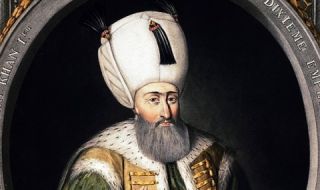
On September 27, 1529, Suleiman the Magnificent besieges Vienna. For this purpose, he gathers an unprecedented army of 120,000 men, equipped with 300 cannons and 20,000 camels. In addition to the spahis and janissaries, Suleiman the Magnificent's army also included Moldavians and Serbs.
The garrison of Vienna numbered nearly 17,000 soldiers and 75 cannons.
The capable Austrian general Wilhelm von Rogendorff took command of the garrison, and operational leadership was entrusted to the 70-year-old German mercenary Niklas Graf Salm.
The Austrian Archduke Ferdinand I of Habsburg prudently left Vienna, and it was defended by only 20,000 men, supported by strong fortress walls. Until October 14, Suleiman I launched several unsuccessful attacks on Vienna. The defenders of the Austrian capital displayed extraordinary heroism.
The Ottoman soldiers were experiencing acute food shortages and were complaining loudly about the cold, which was unusual for Asians. The Sultan and the army feared that they would not be able to return home until the onset of winter. Additionally, epidemics broke out in the Ottoman army camp.
All this forced Suleiman I to lift the siege of Vienna and set off back to Istanbul, where he arrived in December 1529. Suleiman I the Magnificent suffered his first major defeat.
Ferdinand I erected a tombstone in honor of the defender of Vienna - Niklas Graf Salm, who was wounded in the last Ottoman attack and died on May 4, 1530. His sarcophagus is today exhibited in the baptistery of the Fontifkirche church in Vienna.