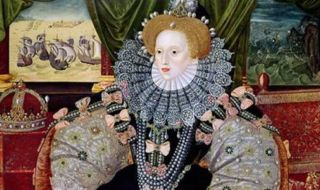
On November 17, 1558, after the death of Queen Mary Tudor, Elizabeth I ascends the English throne.
The people adore their young queen, who returns Protestantism as the main religion in the state (but also very wisely allows Catholics to celebrate their masses). With the help of her very good advisors, and especially relying on the advice of William Cecil, Baron Burghley, Elizabeth I pursues an active policy, emphasizing the economy - her main goal is the development of industrial production and trade.
During the years of Elizabeth's reign, England becomes a great maritime power. The queen not only encourages the construction of new ships, but also patronizes successful sea merchants, as well as pirates, who rob the ships of the Spaniards - the enemy of England. The victory of the English fleet over the Spanish Armada broke the naval dominance of Spain and marked the transition of leadership into the hands of England.
The strengthening of absolutism continued in the political life of the state. However, Elizabeth never married, remaining the "virgin queen" (at least officially). It is not that there was a lack of royal figures who offered her their hand and "half a kingdom". But Elizabeth I rejected all offers.
Elizabeth's power was absolute, but she had to wage a difficult battle with Mary Stuart. The Scottish queen was her cousin - Henry VII was the grandfather of both. But Mary considered herself the heir to the throne, and Elizabeth, the daughter of Anne Boleyn - an "illegitimate child". This opposition developed against the backdrop of the Anglo-Scottish wars and was a big problem in itself. In the end, Elizabeth emerged victorious in this battle, having captured her rival. Mary Stuart was executed, and ironically, it was the son of the beheaded Mary of Scotland who inherited the English throne from Elizabeth - since she herself had no children, she passed the throne to her nephew James I, who finally managed to unite England and Scotland under a single rule.
The last years of Elizabeth I's life were marked by her deteriorating health and the constant loss of people close to her. In February 1603, the queen fell into a deep depression, and the melancholy that gripped her foreshadowed her approaching end.
Elizabeth I died on March 24, 1603, at Richmond Palace.