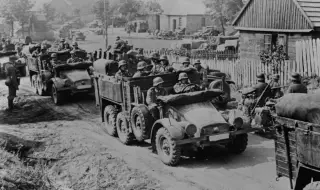
The beginning of World War II left a serious trauma in the collective consciousness of Poland. On September 1, 1939, the country was attacked by Nazi Germany, and two weeks later - by the Soviet Union. Hitler and Stalin divided the territory of Poland until 1941, when Germany occupied it completely.
During the occupation, six million Poles lost their lives. To this day, memories of these ominous events are alive everywhere in the country. But despite this, May 8th is not celebrated in Poland.
A Period in Which Moscow Imposes Its Will
“In Poland, this date is associated with the beginning of communist rule“, commented historian Klaus Bachmann to the German public media ZDF. He points out that although the war officially ended for most people on May 8, fighting was still going on in Poland and the neighboring Belarusian and Ukrainian territories to the east - between anti-communist partisans and the Red Army, as well as between partisans and units created by Polish communists.
“It should also not be forgotten that at that time Poland lost its eastern territories to the USSR and received German territories as compensation, after which millions of people - Poles, but also Ukrainians and other ethnic minorities - fled and were expelled from their homelands.
All this turns May 8 into a day of mourning, because Poland's borders were shifted westward, and the country fell under Soviet rule,“ recalls the historian, who lives and teaches in Warsaw.
Poles are proud of their resistance to Nazis
When it comes to World War II, the most important dates for Poles are different. One is related to the Warsaw Ghetto Uprising in April 1943, when the Jews of the capital stood up to the Nazis and the forced deportations to Treblinka.
The other is the Warsaw Uprising of early August 1944, when the Poles tried to liberate the city from the Nazis. The uprising lasted 63 days, and at first the resistance managed to liberate large parts of the city. It was brutally suppressed by SS units, and tens of thousands died in the clashes, including many civilians. Nevertheless, the Warsaw Uprising is considered a fundamental moment in Polish history, symbolizing the Poles' longing for freedom.
Relations between Germany and Poland remain complicated to this day
The events since then continue to strain relations between Germany and Poland. “Many Poles are convinced that the Germans know too little about the German occupation, the crimes committed against Poland, and the Warsaw Uprising“, says historian Klaus Bachmann.
It is well known that Poland periodically demands billions in reparations from Germany. Warsaw's tone was particularly harsh when the “PiS“ government was in power there. To this day, the populist party uses history to reap political dividends.
Although there is consensus in Polish society and the political elite that Germany and Poland are allies in NATO and the European Union, whose partnership is beneficial for both countries, there is no shortage of counter-messages. “PiS and Confederation candidates are mobilizing voters with anti-German campaigns, which are purely Polish domestic politics and have nothing to do with Germany“, says Klaus Bachmann.
Authors: Natalie Steger | Jacek Lepiarz