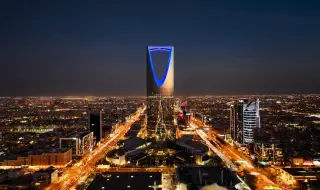
On the large terrace overlooking the city, Hassan Ghazawi and his brother Abbas prepare their equipment, writes ARD. The two are DJs. They say that nightlife used to be hidden underground or in people's private homes. "Now everything has changed - tourists are coming and we can finally show the world what Saudi Arabia is like and what we have - a lot of nightlife, entertainment, events. But we still do not betray our roots and culture”, says Ghazawi. According to him, there is no contradiction between his religion and his love of music.
Radical modernization with one goal
Saudi Arabia is changing rapidly. Crown Prince and de facto ruler Mohammed bin Salman, 39, has transformed the country and modernized it at lightning speed. Ulrike Freitag, director of the Center for Contemporary Oriental Studies in Berlin, told ARD that Bin Salman's motivation is "to secure his rule through radical modernization ordered from above - without the active participation of society".
His goal is to make Saudi Arabia independent of the oil business, to modernize the country, to attract tourists, but also to keep young Saudis in the country. As part of the so-called "Vision 2030", a number of previous bans have been lifted. Driving for women, going to the cinema, partying - all this is now possible in a country characterized by a strictly orthodox interpretation of Sunni Islam - This is the so-called Wahhabi Islam.
"Totally surprising"
Freedom for the country's young people - that's how many young Saudis perceive "Vision 2030". They can finally have fun without worries. A German tourist happens to be among the guests at the club tonight and says she never expected to see Saudi Arabia like this.
For her, it's "totally surprising" that such a thing exists in this country. She approves of the fact that alcohol is not served at the party. "At such celebrations in Germany, it can sometimes be full of drunk people. For me as a woman, it's very nice that that's not the case here," she says. Nearly two-thirds of Saudi Arabia's population is 30 years old or younger. Many Saudis have completed their education abroad, are familiar with the Western way of life and, unlike their parents and grandparents, are unwilling to accept conservative religious rules.
The problem of young people
Young Saudis want to have fun. To ensure that they do not emigrate and that their potential remains in the country, the kingdom is investing heavily in the new Saudi Arabia, which is also attractive to young people. "It is clear that it is about improving the quality of life, because it provides many new leisure opportunities", an expert told ARD
Saudi Arabia also relies on computer games and the gaming sector as an economic driver. The country has announced plans to invest around $38 billion in this industry, the German public media noted. According to the authorities, there are 23.5 million gamers in Saudi Arabia, half of whom are women. The crown prince is also said to be an avid gamer.
What about human rights?
But the new Saudi Arabia should not mislead people, human rights activists warn. The country's social opening is by no means a political opening. The kingdom is ruled with an iron fist, and political opponents are eliminated - says Katja Müller-Falbush from "Amnesty International".
"The"glamorous facade" that Mohammed bin Salman likes to present to the world, "in no way reflects what is happening in Saudi Arabia with human rights", the human rights activist tells ARD. The new Saudi Arabia is trying to walk a difficult tightrope: on the one hand there is strict absolutism, and at the same time - openness and secular life.
The problem with Captagon
There may be no alcohol in Saudi Arabia's clubs, but people take other drugs. Captagon in particular has become a huge problem in the Gulf region. The pills, which until recently were mass-produced in the chemical laboratories of the former Assad regime in Syria, are now smuggled in huge quantities and used as stimulants by nightclubgoers.
Author: Anna Ozius ARD