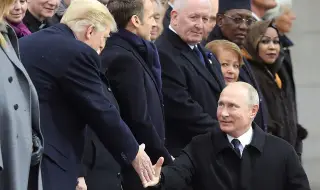
For about 30 hours, the illusion of transatlantic unity on Ukraine was maintained, writes Nick Patton Walsh for CNN.
Europe and Ukraine were pushing for an agreement on the 30-day unconditional ceasefire proposed by the Trump administration two months earlier. European leaders said U.S. President Donald Trump personally backed their plan — and threatened sanctions if Russia refused to sign it by Monday — in a Saturday phone call, a photo of which they posted online from Kiev.
Trump’s special envoy for Ukraine, Keith Kellogg, even joined a chorus of U.S. allies demanding that Russia stick to the ceasefire request.
But then Russian President Vladimir Putin spoke, refusing even to mention the request, instead presenting something old as something new: direct talks between Russia and Ukraine in Istanbul, four days later. And transatlantic unity crumbled. Trump jumped on the Kremlin’s offer—simply stating on Truth Social that Putin didn’t want a ceasefire—and instead pressed Ukrainian President Volodymyr Zelensky to "HOLD THE MEETING, NOW!!!“
The pendulum swung back again. Trump was visibly silent as longtime U.S. allies trumpeted their newfound unity. Putin spoke, and Trump refocused.
Zelensky was left with only the personal commitment and bravery to suggest that the meeting be held face-to-face with Putin, the man accused of war crimes against his own people. This is a difficult move for him to make domestically.
It is important not to rule out the possibility that Moscow and Washington are plotting something behind the scenes that could bring the world closer to peace. But as Trump spoke, European leaders seemed to fall silent in turn. The skies over Ukraine did not.
On the night the ceasefire was called for, Russia launched 108 drone strikes, including one that found a 10-year-old girl buried under rubble in the Kherson region.
The significance of Kiev’s declaration on Saturday is not so much the immediate likelihood of a month-long cessation of fighting. European leaders seemed deeply skeptical that their overture would win Moscow’s approval. Instead, cynics might argue, the exercise was intended to prove to the White House that Putin is not interested in peace or even the concrete ceasefire proposal that the Trump administration is seeking.
But that was not the only “revelation” that Europe’s four largest military powers received on their complicated and lengthy trip to the Ukrainian capital. Trump was also improving their perspective on his real position.
Now Putin is three times bolder. He has managed to completely ignore the European and Ukrainian demands - he has not even mentioned them directly. Second, he has not faced - so far - any of the “massive sanctions“ against Russia and increased military aid to Ukraine that Europe seemed to assume Trump would support in the event of a ceasefire.
Third, his offer of direct talks in Istanbul - nothing new about it, except for the date Thursday - has suddenly become the basis of Trump's position. The US president has raised the possibility of consequences if those talks fail. But between Russia’s apparent disinterest in peace and Ukraine’s allies escalating their measures against Moscow, another step has been taken.
The one consistent theme in all the chaos of the past few months has been Trump’s reluctance to take steps that would damage his relationship with the Kremlin. We don’t know whether Trump and Putin spoke in the period between the Europeans’ visit to Kiev and Trump’s post on the social media site “Pravda“. But perhaps we don’t need to: In any case, when faced with a fork in the road between the unity his European allies seek and a path that would keep him and Putin on better terms, Trump chose the latter.
The threat of sanctions, large-scale or not, has always been a tricky one. Russia has already been hit with serious sanctions, and there are still limited steps that could have real consequences without significantly harming the West. The key question is whether Europe will try to hurt Russia without American support. That would expose its disunity, but it may be a better choice than letting its threats in Kiev ring hollow.
The Istanbul meeting, if it does take place, is in itself an extremely dangerous step. Putin and Zelensky clearly despise each other. The former sees the latter as a pro-European traitor and a symbol of success born of an imperial decline that Soviet-era bureaucrats have yet to accept. The latter sees the former as the man who mercilessly and unprovokedly invaded his country and mercilessly bombs children every night. The two men are more likely to fail to find common ground than to emerge reconciled, with a way forward.
It is not out of the question that the White House, with US Secretary of State Marco Rubio in Turkey on the proposed date and Trump in the region, will try to facilitate. However, Putin has yet to even agree to attend, despite having suggested direct talks, which is why any acceptance now seems like some grand gesture of peace. Too much U.S. involvement could negatively affect their relations with almost everyone.
The simplest conclusion to be drawn from the past few days is that Trump doesn’t see Putin buying time. The Kremlin’s forces appear to be strengthening, not weakening, along the front line they are pressing hard against near Pokrovsk in eastern Ukraine. The weekend deadlines have come and gone, revealing the brief moment of unity as a diversion and the White House as unwilling to anger Putin.
The eventual meeting in Istanbul is just two days away. But it will not bring immediate peace, or perhaps a ceasefire at all, but only diplomatic showmanship and considerable personal animosity between two men from completely different generations in the post-Soviet world. It could even set back the peace process and again postpone the moment when Trump must decide whether to join his European allies in inflicting pain on Russia for refusing a ceasefire.
What the response to Trump’s postponed, vital decision will be is already clear. It is not clear how Europe and Ukraine will cope on their own.
Link to main version
Май 13, 2025 20:08 600
CNN: Donald Trump apparently doesn't see that Putin is trying to buy time
Zelensky was left with only the personal commitment and bravery to suggest that the meeting be held face-to-face with Putin, the man accused of war crimes against his people
Снимка: БГНЕС/ЕРА