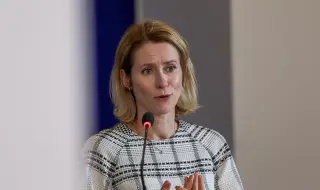
The European Union has begun a phased lifting of sanctions imposed on Kosovo in 2023, but the process remains tied to a sustainable de-escalation of tensions in the north of the country. This was stated by the EU's high representative for foreign policy Kaja Kallas, quoted by "Reuters", during her visit to Pristina on Thursday, News.bg reports.
The sanctions were introduced due to the actions of Prime Minister Albin Kurti's government, which led to an escalation in the Serb-dominated north of the country, where Kurti sought to strengthen control of the central government. The measures included a reduction in European funding by at least 150 million euros.
“As a sign of our commitment, I can announce that the EU has started to gradually lift the measures introduced in June 2023“, said Kallas. “This decision opens up opportunities for more active cooperation with Europe, but remains conditional - a sustainable de-escalation in the northern regions is needed.“
Kallas also called on political parties in Kosovo to overcome the political deadlock that has prevented the formation of a new government after parliamentary elections in February. The country has been facing serious difficulties after Prime Minister Kurti failed to secure the election of a new parliament speaker - a key step in forming a coalition government. Since mid-April, parliament has been meeting every 48 hours, but without success.
Earlier that day, Kallas also visited Serbia, reaffirming the EU's commitment to enlargement in the region. She stressed that Kosovo should benefit from the €6 billion Western Balkans Growth Plan, but this requires stable institutions capable of implementing the necessary reforms.
Both Kosovo and Serbia continue to pursue EU membership, but their progress remains highly dependent on the normalization of bilateral relations. Although the two countries agreed to an EU-facilitated dialogue back in 2013, concrete results have been limited so far.