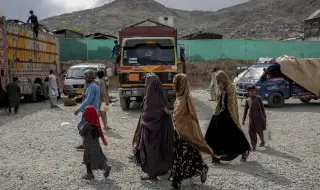
In many neighborhoods of Kabul, no water is flowing from the taps anymore. Those who want to drink, cook or wash have to get it themselves - like 45-year-old Bibi Yan, who carries water from a barrel in the garden to pour it into the washing basin. The woman told Agence France-Presse that she monitors her family's water consumption very carefully. "Women are particularly in need of water for the household. We pay about two euros a week for water - money that we need for so many other things.“
Bibi Jan is not the only one suffering: according to UN data, Kabul's groundwater could run out completely by 2023 - if countermeasures are not taken. Already, almost half of the city's wells have dried up, writes ARD.
Kabul is growing too fast
One of the main reasons is the rapid expansion of Kabul. In 2001, the Afghan capital had about one million inhabitants, and now they are about six million. Many of them did not come voluntarily, but fled because of war, poverty or political coercion – as has recently happened in neighboring Pakistan.
However, the infrastructure cannot handle so many people, and investments in water supply are not being made, Elke Gottschalk from the World Food Programme tells ARD.
“This means that everyone has to dig their own wells, and the groundwater is depleted. And there are no wastewater treatment systems“, the expert points out. Many households simply pour their wastewater onto the road, into ditches or into rivers, which pollutes the groundwater. “The deeper you have to dig, the higher the risk that the water will contain harmful metals or salts.“
The World Food Programme office in Kabul has also encountered this problem – there the well has to be deepened many times to provide enough water.
The families have no money
„When we moved in, the well was 80 meters deep, which was enough to provide ourselves with water. Two years ago we had to deepen it to 150 meters, and today the wells are already dug 300 meters deep to supply the necessary water“, Elke Gottschalk told ARD.
However, most families in Kabul do not have money for a well. They have to provide their own water - from the tankers that bring it in. Pir Mohammad Mahamadi, who owns a shop, says: „The water from the tankers is better. There is almost no tap water anywhere, and if there is, it is salty and unusable. At best, it's good for washing, but not for drinking. The water from the tankers is relatively good“.
The climate crisis is exacerbating the situation
And the situation could get even worse: Afghanistan is among the countries that are particularly affected by the climate crisis. Without urgently needed investments, Kabul is literally threatened to dry up.
This is a very serious problem, says Shafiullah Zahidi from the state water supply: “We only cover 20 percent of the city's needs. But the other 80 percent of the people also need water. In fact, they should have access to water all the time“.
The country is isolated because of the Taliban
The Afghan Environmental Service is responsible for water quality. But there is a total shortage there, expert Gottschalk tells ARD. “There is a lack of equipment and money, but also experts. There are too few measuring stations, which is why there is no up-to-date data. “The solution would be to invest in infrastructure - in building dams to collect water and ensure a sustainable supply. But right now, no one wants to support Afghanistan,” says the expert.
Since the Taliban took power in 2021, the country has been largely isolated. Many international donors have stopped their aid, and infrastructure projects have been frozen. The situation has been particularly dramatic since the US government suspended almost all aid programs for Afghanistan. Until then, the US provided about half of international humanitarian aid.
When water is a luxury
The consequences are dire, writes ARD: in a country where 85 percent of the population has to live on less than a dollar a day, water has long since become a luxury. Aid organizations report that households spend up to 30 percent of their income on water – some have even taken out loans for it.
Housewife Bibi Jan told the German public-law media that she uses the precious water several times out of necessity - for bathing, washing dishes and doing laundry. “My husband is a day laborer, he earns between 100 and 150 Afghanis a day. When we need water, he doesn't buy anything else that day. He usually brings groceries when he comes home, but when we don't have water, he doesn't bring anything from the market for two days - he only brings money so we can buy water.“
150 Afghanis is about 1.80 euros. “When I give the children only water for a few days, they say - you bought water, but there's nothing for us.“ While things have changed in the Afghan capital, Kabul, families like Bibi Jan's are forced to make daily choices - food or water, summarizes ARD.
Author: Franziska Amler ARD