Comment by Ivan Preobrazhensky:
The first half of the year has not yet ended, and the Russian parliament, at the suggestion of the government, is already shrinking the budget, shamefully calling it "amendments". For example, the projected revenues from the sale of oil are being adjusted downward by more than 2.5 trillion rubles. At the same time, the deputies are busy proposing new ways to replenish the budget, some of which are quite original - for example, confiscating the property of Russians who have left Russia. Another idea is the introduction of a "luxury tax". The Russian president, on the other hand, is concerned about the potato shortage and is looking for a way to solve this problem.
Potatoes and Other Woes
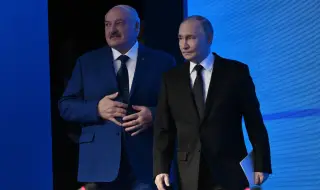
One of the main public dialogues recently was precisely the discussion of potato prices between Vladimir Putin and Alexander Lukashenko. The situation on the market is really close to critical. The seriousness of the problem is also evidenced by the decision of the governor of the Kaliningrad region to ban the export of the scarce root crop, after it rose in price by almost 100 percent. Even Putin himself had to admit it after a meeting with Russian businessmen.
The Russian president seems to be forced to take on the role of the "potato father", as the opposition in Belarus calls Lukashenko: understand - to imitate his Belarusian counterpart, who in 2015 digging potatoes in front of television cameras.
Now Putin is personally encouraging Russians to go to their dachas, sharing his Soviet experience in growing potatoes in the countryside. People around him seem afraid to explain to him that the problem is systemic - it is due to the cold and last year's poor harvest.
There was an opportunity to find a solution to the problem, but the Russian authorities and the relevant Deputy Prime Minister Dmitry Patrushev have failed to do the necessary. It seems that the Russian leader is subject to the same propaganda that ordinary Russians are exposed to: it tells them that the problem is the result of their excessive complacency, which has made them stop growing potatoes at their dachas.
However, the potato crisis (and we recall a similar "egg" crisis in 2023-2024) is only one of the problems that the Russian economy is currently facing. And it is by no means the most serious, although it is the most noticeable for Russians, especially the poorest among them.
A much bigger problem for Russia is the crisis with budget revenues, especially the decline in profits from the export of oil and oil products. One can argue for a long time about what played a major role here: the general decline in oil prices and the role of Saudi Arabia in this, sanctions against Russia, the targeted fight against its "shadow fleet" or something else. The main reason undoubtedly remains the forced reduction of budget expenditures by a decision of the State Duma of May 28 at the request of the government, after which the law on the state budget was allowed to be amended once again this year, if necessary.
A series of ideas
The crisis is obvious, and the chaotic activity of the deputies, who rushed to look for new sources of revenue in the budget, only confirms it. For example, they propose to double taxes on the gambling business, introduce new taxes on banking activities and excess income of citizens, and a number of other similar ideas. To this list can be added the project for the accelerated confiscation of property of Russians who have gone abroad and do not agree with the current political course. Even the government is now forced to silence the most diligent deputies in this regard. But the general trend is clear to everyone.
Here too, at first glance, Putin's recent statements at a meeting with big business, where he called for "stifling" foreign online services and once again confirmed that the return of Western business to the Russian market will not be free, seem quite strange. But after all, every country experiencing serious economic difficulties needs exactly that - investors and investments.
In fact, it seems that given the continuation of the war against Ukraine and the lack of progress in the ceasefire negotiations, the Russian authorities prefer to develop the domestic market and domestic companies. After all, Putin calls for stifling not only foreign IT companies, but also foreign markets, and for people to prioritize buying Russian products, even if they are more expensive. So it is more likely that Russians will start eating less (and not just potatoes) than that the authorities will abandon the course of further monopolization of the domestic market.
Putin advises people to start growing potatoes. And they better listen to him.