US President Donald Trump told a press conference at the NATO summit on June 25 that Russia may have territorial ambitions beyond Ukraine. This is in line with long-standing ISW assessments that Russia is preparing for future conflict and setting conditions to justify future aggression against former Soviet states that are not members.
This is according to the Institute for the Study of War (ISW).
Russia is preparing its military and society for a possible future conflict with NATO after the end of the war in Ukraine, including by conducting military reforms; integrating veterans into all levels of Russian local, regional and federal government; and setting rhetorical conditions to justify future aggression against NATO. The Kremlin is using the same rhetoric it used against Ukraine before the war began in February 2022.
The Kremlin is also weaponizing the concept of "compatriots abroad" - the Russian-speaking population living outside Russia that it claims to protect.
The Kremlin is creating information conditions to justify potential aggression against Moldova and the Baltic states.
US Secretary of State Marco Rubio has rightly stated that Russia has not shown a willingness to move forward in peace talks. In an interview with Politico published on June 25, he stated that Russia is trying to "achieve on the battlefield what it demands at the negotiating table", including "control over certain territories". But he noted that this goal will be harder to achieve than Russia currently believes.
Rubio said that Russia has suffered more than 80,000 casualties since January 2025, but Putin nevertheless continues to "fuel the war machine" and "has not shown a willingness to move forward" in peace talks. The statements are consistent with ISW’s assessment that Russia is attempting to delay the negotiation process and prolong the war in order to secure additional territorial gains.
Russia’s maximalist demands for negotiations over Ukrainian territory, including significant amounts of territory that Russia does not currently occupy, constitute an information tactic aimed at forcing territorial concessions to compensate for gains that Russia cannot achieve on the battlefield.
ISW continues to assess that Russia is unwilling to engage in substantive negotiations to end the war in Ukraine in a manner inconsistent with maximalist demands.
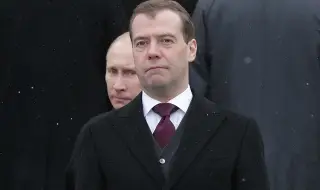
The Kremlin continues to use the aggressive rhetoric of Russian Security Council Deputy Chairman Dmitry Medvedev to undermine Western support for Ukraine. The deputy chairman of Russia's Security Council, Dmitry Medvedev, said on June 25 on his social media accounts, including his English-language channels, that the EU was turning into a politicized, "Russophobic organization that dreams of revenge against Russia".
Medvedev further charged that "Brussels today is Russia's real enemy" because of the arming of Ukraine. Medvedev said that Ukraine's accession to the EU would endanger Russia and hinted that Russia could destroy all of Ukraine to prevent this outcome. The Kremlin typically uses Medvedev to amplify provocative rhetoric designed to incite panic and fear among Western decision-makers and discourage Western aid to Ukraine.
Kremlin officials and associates have repeatedly promoted the idea that the EU is essentially a military organization like NATO.
Russia is ramping up its missile production capacity with support from Belarus and China to evade sanctions. The Ukrainian newspaper "Kiev Independent" reported on June 24 that the Russian state-owned "Votkinsk" plant had hired 2,500 workers, built new facilities, and imported specialized production equipment.
"Kiev Independent" said an analysis of the plant's internal business operations showed that the plant had been sourcing production equipment from companies in China, Taiwan, and Belarus through private Russian intermediaries. "Kiev Independent" said it was unclear how many ICBMs the Votkinsk plant was currently producing, but noted that internal documents indicated that Russia was investing in its ICBM arsenal and that the Russian Ministry of Defense (MOD) had ordered the Votkinsk plant in March 2022 to fulfill a $13 million contract to produce parts for the Bulava ICBM by 2024.
NATO and Western officials reaffirmed their commitment to collective defense and security, to increasing defense spending in the face of increased Russian aggression, and to providing support to Ukraine. NATO heads of state and government participating in the NATO summit in The Hague issued a joint declaration on 25 June.
The declaration reaffirmed NATO’s commitment to collective defense, as defined in Article 5 of the NATO Treaty, and committed to investing five percent of gross domestic product (GDP) annually in core defense needs and defense and security-related spending by 2035. The declaration also reaffirmed NATO’s commitment to support Ukraine and that NATO members would include direct contributions to Ukraine’s defense and defense industry in their cost estimates. The declaration stressed that Ukraine’s security contributes to NATO’s security. NATO Secretary-General Mark Rutte told reporters on June 25 that NATO faces a long-term threat from Russia, especially because North Korea, the People's Republic of China (PRC) and Iran are supporting Russia's military efforts against Ukraine, and that NATO must increase its defense spending.
In his plenary speech at the NATO summit, Rutte stressed the importance of Article 5 and the commitment to invest five percent of GDP in defense.
US President Donald Trump told reporters at the NATO summit that the United States is committed to Article 5.
A large group consisting of members of the European Parliament (EP), members of national parliaments, politicians, diplomats, military and experts on the subject has sent an open letter to NATO leaders calling for support for Ukraine, including a call for increased aid and air defense.
Ukraine's European partners continue to lend military aid to Ukraine and to deepen cooperation with the Ukrainian defense industrial base. The Norwegian government announced on June 24 that it would allocate about $642 million to purchase drones for Ukrainian forces from Ukrainian and European manufacturers.
On June 24, Ukrainian forces likely carried out a long-range strike on a Russian military-industrial complex in the Rostov region. The head of the Ukrainian Center for Combating Disinformation, Lieutenant Andriy Kovalenko, who often reports on successful Ukrainian drone strikes, reported that Ukrainian forces had struck the Russian "Atlant-Aero" plant in Taganrog, Rostov region.
Kovalenko reported that the "Atlant-Aero" plant specializes in the production of critical Russian components for combat drones and control systems, including "Orion" drones, electronic warfare systems and digital integration for first-person view (FPV) drones, and barrage munitions. Russian sources have released footage of explosions in Taganrog and claim that Russian air defenses repelled a drone strike near Taganrog and other areas of Rostov Oblast overnight.