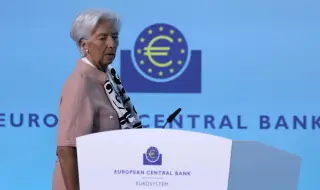
Eurozone inflation rose slightly in June to 2.0%, right at the level the European Central Bank (ECB) sets as its target. This confirms that the period of uncontrollable price increases is over. The data published by Eurostat fully coincided with the expectations of economists surveyed by “Reuters“, reports News.bg.
The increase from May's value of 1.9% is symbolic and is due to contradictory factors. Energy and industrial goods prices continue to exert downward pressure, while services keep inflation alive – with a growth of 3.3% in June compared to 3.2% in May. In June alone, the services sector grew by 0.7%, supporting the ECB’s hawkish arguments that domestic inflationary pressures remain resilient.
The so-called core inflation rate, which excludes volatile components such as food and energy, remained stable at 2.3%, in line with market expectations.
Against this backdrop, the ECB has already cut key interest rates by a total of two percentage points over the past year, after they hit record highs during the fight against inflation. The focus is now shifting to whether further monetary policy easing is needed, given the weak economic recovery.
Economists are forecasting another rate cut to 1.75% by the end of the year. A period of stability is then expected, before possible further increases in late 2026.
However, the outlook is complicated by the escalating trade dispute between the European Union and the administration of President Donald Trump in the United States. So far, the tensions have cooled inflationary pressures through a decline in economic confidence, a strengthening of the euro and a decline in energy prices. But if trade barriers persist, a counter-reaction from the EU is expected, which could lead to additional inflationary risks through restructuring of global supply chains and rising production costs.
Additional pressure on prices is also expected from structural factors such as the need for significant investment in the “green transition“ and an aging working-age population. Economists say this will create lasting pressure on inflation in the medium and long term.
In this context, inflation may accelerate again not because of growing consumer demand, but because of increased structural costs that will be borne by households and businesses in the conditions of an increasingly turbulent global economy.