From January, it will be possible to pay in euros along the Black Sea coast - that is clear. But it is not so clear what the introduction of the euro means for Bulgaria, writes “Süddeutsche Zeitung“ (ZT). More specifically - how it is accepted by the population and to what extent it is being instrumentalized politically, especially by the pro-Russian far-right opposition, which is very strong in Bulgaria, as in other countries of Southeast Europe.
The German publication notes that Bulgaria is among the weakest economic countries in the EU, contributing only 0.6 percent to the Community's GDP. Added to this are high inflation, the persistent problem with corruption and a certain lack of governance. “Süddeutsche Zeitung“ reminds us that in the last four years Bulgaria has had seven elections and only since January has there been a relatively stable ruling coalition again.
Expectations for economic recovery
The new currency is associated with great expectations, the German publication emphasizes - for example, that the country's credit rating will improve, that Bulgaria will become part of the banking supervision system in Europe and in general - that as a country in the eurozone it will receive greater political weight. In addition, a large part of the population will benefit from the elimination of transaction costs when exchanging currency.
The rosy picture that many experts paint, however, contradicts the attitude towards the new money in the country itself, points out the ZC. This is the fear that the new currency will be used to increase prices, and as a result, wage costs will increase significantly. Contrary to the popular cliché, Bulgaria is no longer a country with low wages, and there is also a shortage of qualified specialists, especially in tourism and the IT industry.
The German publication emphasizes that many concerns can be dismissed - especially since the lev is tied to the euro, and for years many real estate transactions have been carried out in euros. The deputy director of the European Council on Foreign Relations, Vesela Cherneva, is quoted as being convinced that everything will stabilize in the coming months. "When people see that nothing terrible is happening, fears will dissipate," she says.
"Vazrazhdane" and the protests against the euro
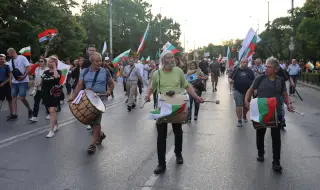
However, the far-right opposition party "Vazrazhdane" has been opposing the introduction of the euro for months - organizing demonstrations and protests. As Cherneva says on this occasion, on the one hand the party serves the widespread Euroscepticism in Southeast Europe, that Brussels dictates its decisions to the member states. On the other hand, “Vazrazhdane“ is a pro-Russian party with good contacts with Moscow, where they have no interest in Bulgaria being even more closely linked to the EU through the introduction of the euro, Cherneva explains to ZC.
The website of the Second German Television ZDF writes that the Bulgarian population is divided on the issue of the euro – According to polls, about half of Bulgarians are skeptical about the new currency, for which Petar Ganev from the Institute for Market Economics has an explanation: “Part of the distrust and fears of joining the eurozone are obviously fueled by the political instability in the country over the past four years“.
ARD quotes Eurosceptic participants in the anti-euro protests in Sofia, one of whom says: “The eurozone is the worst thing that can happen to Bulgarians now, since we are already a subordinate territory“. Her like-minded person in turn asks: “What are these European values? We don't need the euro. What is it for anyway?“.
Money is an emotional factor
“Süddeutsche Zeitung“ points out that the rejection of the euro is also due to a certain nostalgia. Money is always an emotional factor, many fear that with the loss of the Bulgarian lev they will lose part of their national identity. This is also a consequence of the fact that the current government did not do enough to inform the population about the change. “Information is missing, and there is a lot of false information“, Sonya Miklay from the German-Bulgarian Chamber of Industry and Commerce told the ZC.
In addition, President Rumen Radev is a Eurosceptic, the German publication notes. He wants - as does the “Vazrazhdane“ party - to hold a referendum on the euro in Bulgaria. Vessela Cherneva points out that Radev's demands are politically motivated and explains that all governments in recent years, and there have been many of them, have always clearly declared themselves in favor of the euro.