If the euro fails, Europe will fail too, Angela Merkel had said at the height of the Euro crisis in 2010. Werner Musler from “Frankfurter Allgemeine Zeitung“ (FAC) recalls her words on the occasion of Bulgaria's entry into the eurozone.
A political rather than an economic decision
Musler emphasizes that the European Commission's argument for Bulgaria to be accepted as the 21st member of the eurozone is more geopolitical than economic and warns: “And experience shows that when politics dominates over economic arguments in the monetary union, it rarely ends well“.
Inclusion in the eurozone will bring the country closer to the heart of Europe, and it will be more difficult for third countries such as Russia to influence domestic political and economic decisions in Sofia, the publication explains.
Unfounded fears
And Moscow has been doing exactly that for years, and pro-Russian forces in Bulgarian politics are very active, the author emphasizes and comments: “It is quite obvious that the current reluctance of a part of the population to adopt the single European currency is also the result of Russian disinformation“.
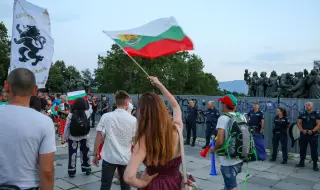
In a report from Sofia, the German public media outlet ARD meets with protesters against the adoption of the common European currency. “The eurozone is the worst thing that can happen to Bulgarians at the moment, because we are already a subordinate territory“, claims one woman to the media outlet. A man asks: “What are these European values? We don't need the euro. What is it for us?“. Unfounded fears are spreading among people - for example, that the European Union will have access to their savings, explains Zilke Hanne from ARD, and the position of figures such as President Rumen Radev only fuels them.
"The protests bear the Kremlin's imprint"
Brussels wants to view joining the eurozone as a signal to financial markets that the country is a secure part of the EU. This is how a large part of those Bulgarians who welcome the decision see it. “The political benefits seem increasingly significant, as the protests against the euro bear the Kremlin's imprint“, musician Veselin Dimitrov commented in this regard to “Agence France-Presse“.
The agency recalls Bulgaria's difficult path to the euro, which was accompanied by political turmoil and seven parliamentary elections. The publication also notes that Bulgarian society remains divided in its attitude towards the euro, with experts explaining the skepticism largely by fears of rising prices and a decrease in purchasing power.
Rumors about artificially low inflation
However, in this debate, traditional economic criteria tend to take a back seat, writes FAC. On the one hand, the Bulgarian lev has been firmly tied to the euro for many years, and the country has one of the lowest government deficits in the entire EU. But on the other hand, Bulgaria barely meets the inflation criterion, and rumors that the government has limited its level by lowering state-regulated prices, for example in public healthcare, do not subside, FAC emphasizes. Added to this are the constant questions about corruption, the efficiency of public administration and the independence of the judicial system.
Werner Musler concludes his text with a warning: When we close our eyes to some of the criteria, as happened in the case of Italy and Greece, this does not lead to anything good, although in Bulgaria, unlike the other two southern countries, this is not about public finances.