Russian sabotage and reconnaissance groups have recently entered the southern part of Pokrovsk, while Russian forces continue their attempts to surround the city. Geolocated footage from July 21 shows clashes between Russian and Ukrainian forces on the E50 highway between Pokrovsk and Pavlograd, News.bg reports.
According to the Institute for the Study of War (ISW), Ukrainian sources claim that Ukrainian forces are searching for and destroying the infiltrated Russian groups. “Ukrainska Pravda“ reported that sabotage elements entered the city on July 17, and the Ukrainian army is conducting clearance operations. General Oleksandr Syrsky said that Ukrainian forces had repelled a Russian group attempting to infiltrate Pokrovsk.
Geo-tracked videos show Russian forces advancing near Zverovo (southwest of Pokrovsk). Russian bloggers claim that fighting continues, and the area remains a contested “gray zone“. Data suggests that the Kremlin is preparing to step up attacks on Pokrovsk.
However, the advance of Russian forces to the south, southeast, and southwest remains hampered by Ukrainian drone operations since late 2024. In August 2024, they temporarily entered Mirnograd, but were pushed back. Russia may try to force Ukrainian forces to withdraw by threatening encirclement.
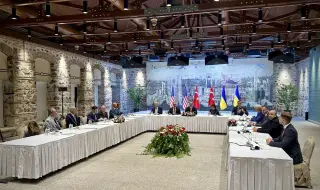
The third round of talks between Ukraine and Russia will take place in Istanbul on July 23. However, the Kremlin has expressed pessimism. According to President Zelensky, the Ukrainian delegation, led by Rustem Umerov, will insist on the return of prisoners of war and deported children.
Kremlin spokesman Dmitry Peskov said that no breakthroughs are expected, and Russia will defend its interests, including regime change in Ukraine and limiting its military capabilities. He stressed that the parties will discuss the memorandums exchanged on June 2, but ISW points out that Russia is deliberately dragging out the process.
At the same time, the Kremlin is preparing its economy and army for future war, including with NATO. The head of Ukrainian intelligence, Kirill Budanov, announced that Russia plans to spend $1.1 trillion on rearmament by 2036 (about $110 billion per year). The restoration of the Moscow and Leningrad military districts and the formation of new divisions suggest long-term preparations for a large-scale conflict.
Putin announced that the military budget for 2025 will be 13.5 trillion rubles (about $172 billion), with a phased reduction planned from 2026. However, there is a lack of transparency about the actual costs and how the rearmament budget is allocated.
The Kremlin continues to seek scapegoats for the failures on the border. The deputy governor of the Bryansk region, Nikolai Simonenko, and the former deputy governor of the Belgorod region, Rustem Zainulin, have been detained for misuse of funds intended for defensive fortifications. The former governor of the Kursk region, Alexei Smirnov, was also arrested earlier. According to ISW, this is part of the Kremlin’s strategy to shift blame to local authorities.
On July 7, Putin dismissed Transport Minister and former governor of Kursk Oblast Roman Starovoit, shortly before his alleged suicide.
The Kremlin has also been tightening censorship on Telegram channels. On July 22, Russian authorities raided the offices of the law enforcement-affiliated Baza channel and detained editor-in-chief Gleb Trifonov and his colleagues. The motive is likely to be an investigation into the downed Azerbaijan Airlines plane in December 2024, in which Baza published a recording accusing Russian authorities of refusing an emergency landing.
These actions further worsened Russian-Azerbaijani relations after an attack on the office of the Russian agency “Sputnik“ in Baku. Putin has refused to take responsibility for the plane incident.
According to the Rome Statute of the International Criminal Court, deliberate attacks against civilians constitute a serious violation of international law. The incident with the Azerbaijani plane once again highlights the brutality with which Russia acts against the civilian population, including in the occupied Ukrainian territories.