While they were playing golf, Senator Lindsey Graham told Donald Trump that it was time to impose sanctions on Russia. Do you think there has really been any change in Washington?
Ann Applebaum: I can't predict Donald Trump's reactions. He doesn't think geopolitically. He doesn't think strategically. Trump makes decisions based on who he's talking to and whether he thinks he's winning. It's true that the Senate, Graham and, as I understand it, over 80 other senators are ready to support a bill that would significantly tighten sanctions. It's also true that people close to Trump are advocating for it. But there are other voices, again from people in his entourage, who want him to make a deal with Putin because it could be very profitable for them personally or for the president financially. There are people in the MAGA movement who are actively supporting Russia, so we'll just have to see who wins this debate.
Why is Trump so patient with Putin? How do you explain it?
Ann Applebaum: A lot of people have been asking this question for a decade. During Trump's first term, there was a massive investigation into the sources of Russian influence on his campaign, and it was inconclusive. It showed that there was influence, but it never proved that Trump was involved in criminal activity or that he committed a crime. We know that Trump had ties to Russia for 30 years. His businesses received Russian investment. And this is not a conspiracy theory - all of this is documented. We know that he has a favorable attitude towards Russia and that he has been very negative about alliances in which the United States is a part for a long time. This is written about in his books published more than a decade ago. So he had all these instincts even before Putin came to power, and since Putin has been in power, Trump has been very impressed with people who operate without checks and balances, without restrictions, without courts, without journalists. He admires this kind of power, he is favorable to Russia, and he is personally impressed by Putin. Of course, I don’t know how their personal relationship is developing, but Putin is an experienced KGB officer. He knows how to find a person’s weak points, how to manipulate him and convince him that he is a friend. Surely Trump considers Putin his friend and has said so himself.
Isn’t this a way of telling the audience that he is in control of the situation? Or does he really believe that Putin can be his friend?
Anne Applebaum: I think he really believes it, because he doesn't use those words about other people, about other leaders, but he uses them about Putin.
Many people thought that Trump was incapable of empathy, that it wasn't part of his psyche, his character. And suddenly we see him talking to a Ukrainian reporter during a press conference in The Hague after the NATO summit, and he looks different - friendly and empathetic. Do you think that maybe something has affected his psychological state lately?
Anne Applebaum: I can't answer that question. He clearly doesn't feel empathy for many people. He talks about his opponents as "parasites". He talks about immigrants in the United States as those who "poison the blood of the nation". That's the language that Hitler used. So he's a man who's immune to cruelty, he's not bothered by civilian casualties. I highly doubt that one incident changed him. But who knows.
What goals do you think Putin has in Ukraine?
Ann Applebaum: Putin definitely has a strategy. And he's set himself three goals that overlap a little. The first is the imperial goal. He wants to revive the Russian Empire by becoming its leader. And that's going to be his role in history. To achieve that, he wants Ukraine to become either a puppet state or a full-fledged part of Russia. He wants to destroy Ukrainian identity. He wants Ukraine to cease to exist as a nation and to be re-incorporated into the Russian Empire in one way or another. In what format exactly - I don't know, but it doesn't matter. His original goal, as we know, was to capture Kiev in three days and the rest of the country in six weeks. That plan failed. Now they are working on Plan B - to undermine and destroy the country as much as possible. That is his first goal.
The second goal is to destroy the ideas that led to the Ukrainian revolution of 2014 - the year of the Maidan. People waving EU flags, carrying anti-corruption banners, calling for the resignation of the authoritarian president who was pulling Ukraine towards Russia... When that revolution succeeded, and President Yanukovych fled the country, it was a kind of wake-up call for Putin. Because, of course, this is the kind of revolution he fears most - the kind of revolution that almost happened in 2010 or 2011 in Russia itself. This is the language of the fight against corruption that Alexei Navalny used - the language not only of democracy, but also of the rule of law, transparency, accountability, the fight against theft. This is the language that is most harmful and most dangerous for Putin. It is a kind of war of ideas.
The third element of Putin's strategy is global. I mean, Putin really has a geopolitical strategy, and his strategy is to undermine international law and the world rules that have been established since World War II.
After the Cold War or after World War II?
Ann Applebaum: Yes, after World War II: The UN Charter, which guarantees the sovereignty of states within their borders; the Geneva Conventions on the rules of warfare, which say that wars cannot be fought against civilians; the UN Genocide Convention, which prohibits the extermination of entire peoples - he wants to show that all of these things mean nothing. He can destroy and undermine them with impunity and get away with it. Sometimes he talks, albeit a little vaguely, about the multipolar world that he wants to live in. "Multipolar" is a word that doesn't really mean anything. I mean, obviously a multipolar world implies a world with many powers. But that's exactly what we have now. I think Putin has something else in mind - a world in which might determines right, in which strong countries can invade weak ones. This is the world in which he would like to live. And not in a world in which all these rules, the UN, the USA... I suppose these are his goals - personal, political, but also global.
By the way, it is said that in the beginning Putin was different, but after that speech of his at the Munich Security Conference he changed. What do you think?
Ann Applebaum: I never considered him a "great reformer" or a "great friend". From the very beginning, I was very disturbed by the language in which he spoke about himself - as a Chekist. So I never had high hopes that he would be some kind of democrat. It is possible that he changed his strategy. I mean, at the beginning of the 21st century, it was advantageous for him to maintain friendly relations with the West. He wanted Russia to join the G8, and for a short time it did enter that circle. And he was looking for some kind of compromise or joint projects with American and European leaders. But he remained a Russian imperialist, of course he is.
What do you think the West doesn't understand about Putin and his Russia and the way it is governed? And what do you think Putin doesn't understand about the West?
Ann Applebaum: I think the West doesn't understand the extremism of Putin's regime, Putinism. I've said before that the West still imagines that they can make a deal with Putin, that if we just give Crimea to Russia, he will stop fighting. I doubt they realize that. Putin's goals are much broader and more ambitious. And those goals include the destruction of the transatlantic alliance and eventually the European Union. You understand that the war will end when Putin loses it or at least convinces himself that he cannot win it.
And what doesn't Putin understand?
Ann Applebaum: From the very beginning, Putin underestimated the situation. First of all, he underestimated the Ukrainians. Putin knows very little about modern Ukraine. He doesn't understand who the Ukrainians are. He didn't understand that the Ukrainian government is an elected government that has support. And that the Ukrainian national identity is real and the Ukrainians will resist as long as they can, including waging a guerrilla war, even if Kiev falls... But I think he doesn't understand other things. He underestimated the ability and willingness of Europe and the United States to help Ukraine. And he underestimated the power of the ideas that motivate at least part of the West and Western leaders. These are not only democracy, but also unity and integrity. He consistently underestimates them, consistently misunderstands them.
If we look at Europe, countries with a similar history of oppression by the Soviet Union, Russia, and Soviet occupation, why do they react so differently to Putin's war? The most striking examples here are, of course, Slovakia and Hungary.
Ann Applebaum: To understand Hungary, we need to realize that Viktor Orbán is the leader of a country in economic decline. Hungary is in dire need of money and investment. And now he believes that he will get it from Russia and China, not from Europe. Hungary was one of the leaders who made a decision to support Russia. And continues to support it. So there is no particular subtlety here.
Slovakia is a little more complicated. I think it is also about money. It is also about Robert Fico's fear of the Slovak courts and Slovak civil society. It is not entirely clear to me whether he will adhere to any particular line. But as for Orbán, he simply decided to go the other way. In the meantime, however, mass protests are taking place on the streets of Budapest against him. So it cannot be said that all Hungarians agree with Orbán.
And what can be done about this? It's not like you can kick countries out of NATO and the European Union.
Anne Applebaum: If I were the EU, I would find a way to take away Hungary's voting rights. After all, it's no longer an ally. Hungary is not acting in good faith as an EU member. And I would terminate its membership. But, you know, nobody wants to kick it out because there are other Hungarians - more than half of the country's population - who would like Orban to go.
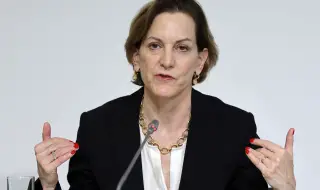
Anne Applebaum is an American historian and writer, a graduate of Yale University and the London School of Economics, who has taught at universities in the US and Europe, and is the author of the books “GULAG“ - about the Soviet camp system, and “Red Famine“ – about the Famine in Soviet Ukraine.
Author: Konstantin Eggert