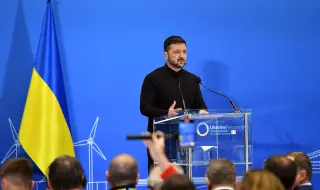
Six years ago, Volodymyr Zelensky urged Ukrainian citizens to report any attempted bribery to anti-corruption agencies. Today, however, these institutions are at the center of the most serious political crisis the president has faced since taking office. Accusations of undermining democracy and authoritarian tendencies have sparked mass protests in Kiev and alarmed European allies, the Financial Times reports, quoted by Focus.
The decision, taken on Tuesday, to transfer the National Anti-Corruption Bureau (NABU) and the Specialized Anti-Corruption Prosecutor's Office (SAP) under the control of the prosecutor general, appointed by the president, has provoked a strong public reaction and accusations of military rule exceeding its powers. Civic activists and opposition politicians say it is an attempt to silence critics and consolidate power at the expense of the principles Ukrainians have been fighting for since the beginning of the Russian invasion.
“The Russians want to kill us… but you get used to this feeling“, activist Lyubova Tsybulska wrote on Facebook. “It is much scarier when you feel threatened by the people who rule your country.“
More than 2,000 protesters gathered outside the presidential administration building on Tuesday night, chanting “Shame!“ and demanding that Zelensky block the law. Among them were veterans wounded at the front. The demonstrations continued past midnight despite restrictions on movement, spreading to other cities such as Lviv, Odessa and Dnipro.
According to Western diplomats, the decision was prepared over the weekend by the president and his chief of staff, Andriy Yermak, at a time when Western attention is focused on other crises, including the chaos surrounding Donald Trump. They believe the actions are aimed at consolidating control over key institutions and minimizing investigations targeting people in Zelensky's inner circle.
One of the main reasons for the decision may be the criminal investigation into former Deputy Prime Minister Oleksiy Chernyshov, a key ally of the president, who is accused of abuse of power and illegal enrichment. Chernyshov denied the charges but was fired last week.
The move comes after a series of crackdowns on critics and activists that have sparked accusations that Zelensky is using martial law to weaken the opposition and civil society. The law was passed at an extraordinary session with the votes of former pro-Russian deputies and representatives of Yulia Tymoshenko's party. According to NABU director Semyon Krivonos, those who voted "in favor" included deputies with the status of suspects in ongoing investigations.
French President Emmanuel Macron and European Council President Antonio Costa have called on Zelensky to step down. While the Ukrainian president says the law is needed to eliminate Russian influence in anti-corruption institutions, his critics accuse him of undermining democracy and risking relations with the West at a crucial stage of the war.
Comparisons with the so-called The January 2014 “dictatorship law” passed by Viktor Yanukovych’s regime against the Euromaidan protesters further heightened tensions. Even from the front lines came sharp criticism, with MP and commander Yegor Firsov expressing concern that such actions were demoralizing soldiers: “With such news, the army will say: ‘Why are we fighting for this at all?’”
In the midst of public discontent, the head of military intelligence, Kyrylo Budanov, called for unity:
“Ukrainian history has taught us that a nation loses when it is torn apart from within. Only a strong army and strong institutions can save us.”
On Wednesday evening, Zelensky announced that he would submit a new bill to parliament that would guarantee the independence of anti-corruption bodies. What it will involve and whether it will be able to quell the tension remains to be seen.