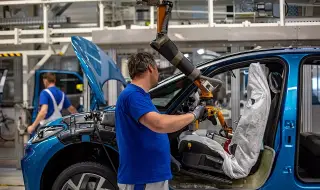
The German automotive industry is massively laying off workers and employees due to the crisis in the industry. In just one year, jobs have decreased by 50,000 - more than in any other sector of the economy.
German industry is in deep crisis, with the automotive sector particularly hard hit. In just one year, around 51,500 jobs have been cut, or nearly seven percent of all jobs, according to an analysis by the consulting company EY, based on official data from the Federal Statistical Office. No other industrial sector has been hit so hard, writes ARD.
Falling sales - not just in the automotive sector
As of June 30, a total of around 5.42 million people were employed in German industry - 114,000 fewer than a year ago. This means that 2.1 percent of jobs were cut in these 12 months. Since 2019, the last year before the Covid pandemic, around 245,000 jobs have even been closed, the DPA agency also points out on the subject.
The job cuts reflect the difficult conditions for business: in the second quarter, turnover in the industry shrank by 2.1% - the eighth consecutive quarter of decline. According to EY, all sectors, except the electronics industry, recorded a decline.
"Huge drop in profits" and cost-cutting programs
In the automotive industry, sales fell by 1.6%. Car manufacturers are suffering from falling sales, strong competition from China and the expensive transition to electric mobility. Added to this are high energy prices, bureaucracy and a customs dispute with the United States, which is making German exports more expensive.
Manufacturers such as Mercedes-Benz and Volkswagen, as well as suppliers such as Bosch and Continental, are already implementing cost-cutting programs. "The massive drop in profits, overcapacity and weakening foreign markets make job cuts inevitable - especially in Germany, where management, administration and all research and development are located", EY expert Jan Brorhilker told ARD.
Is Germany "deindustrializing"?
The cuts are also affecting other industrial sectors: more than 17,000 jobs have been lost in mechanical engineering, 12,000 in metalworking, while almost no jobs have been lost in the chemical and pharmaceutical sectors, DPA said. Ultimately, German industry is suffering from expensive energy, bureaucracy and weak domestic demand. The tariff dispute with the US has also been a negative factor recently. "The huge drop in exports to the US has hit German industry hard", says Brorhilker.
Critics are already talking about the "deindustrialization" of Germany. Yet employment in industry has actually increased over a longer period of time: according to the Federal Statistical Office, at the end of 2024 it was 3.5%, or 185,000 people, higher than in 2014, the ARD notes.