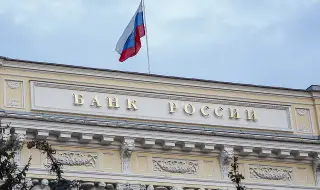
After two years of war boom, when the Russian BBΠ growing at over 4% annually, the country's economy is in recession, the RBC reported, citing Andrei Klepach, chief economist at BEB - one of the largest Russian state banks, which has the status of a "state development corporation" and finances the Kremlin's national projects.
ΠAccording to BEB calculations, the second quarter of BBΠ in the Russian Federation shrank by 0.6% compared to the first quarter. And in the first quarter - it fell by a total of 0.6% compared to the fourth. Such a decline in two quarters is considered a "technical recession".
In the annual plan, the Russian economy remains in surplus, although the growth rate has slowed down dramatically. ΠIn the fourth quarter of 2024 it was 4.5%, in the first quarter of this year - 1.4%, and in the second - only 1.1%.
ΠIn July, economic growth compared to the previous year practically stopped at - 0.4%, according to data from the Ministry of Economic Development.
On the brink of stagnation - with 0.7% growth in July, it because of industry. And the sectors from which the authorities expected import substitution fell into a deep decline: the production of clothing - by 7% compared to the previous year, furniture - by 12%, electrical equipment - by 6.5%.
The very severe recession since the beginning of the war affected metallurgy, where production fell by 10.2% annually. As is the case recently in the country, a war is underway and a large amount of production is needed without interruption, namely this industry is the mystery with the tag "Only in Russia".
The Post does not currently publish an official assessment of the dynamics of BB&P; quarter-on-quarter for April-June. Klepac's opinion about the beginning of a technical recession is shared by analysts from MMI, while Raiffeisenbank and Sarital Economies believe that the economy has avoided it and has shown growth of 0.3% compared to the first quarter.
Economist Dmitry &Piolevoy assessed growth in the second quarter as "around zero". "A technical recession (for now) is not happening, but there is also a clear growth", he writes. Either way, it is obvious that the economy "balances on the edge of recession" and will most likely remain in it in the coming months, believes Oxford Economics chief economist Tatyana Oplova.
The imbalances created during the war are putting pressure on the economy, says Sarital Economics economist Liam &P;ich. The 20 trillion rubles that the state allocates to the military, mercenaries, and defense plants create an illusion of wealth. But the payoff comes in the form of soaring inflation, rising interest rates and growing problems for businesses, writes The Moscow Times.
The situation is being exacerbated by sanctions, low oil prices and property rights issues that are discouraging investment, says SERRA senior research fellow Alexander Kolyandar.
According to the IMF forecast, this year the Russian economy will grow by 0.9%. For the Kremlin, a short-term period of low growth is acceptable, although in combination with low oil prices it will lead to a decrease in budget revenues.