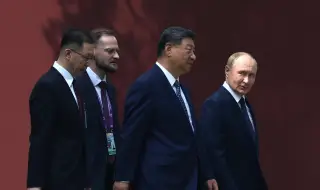
Organ transplantation, rejuvenation therapies and living to 150 years old: during the military parade in Beijing, a microphone caught a conversation between the presidents of China and Russia, Xi Jinping and Vladimir Putin, about immortality. The two 72-year-old autocrats are talking about eternal life. Xi has been in power since 2013, and Putin - for a quarter of a century.
Both have changed the constitution in their country so that they can rule longer. But both (formally communist leaders) probably think that these ideas are not worth sharing with the masses.
Xi and Putin forever? Many shudder at the thought of such a scenario. But what about living to 150 years or more? Will some people be able to become immortal at some point?
What happens when we get old?
The desire for immortality is as old as humanity itself. It is deeply rooted in religions and myths, but it has remained elusive despite scientific and medical advances - at least until now.
Aging is an inevitable biological process in which DNA errors accumulate during cell division, leading to cell damage, mutations, loss of functionality or inflammation. This leads to overall physical and mental decline.
The most normal thing is to get old, says Björn Schumacher of the University of Cologne, who is studying the subject - studying what exactly happens from a biological point of view as we age. "Everything actually breaks down", he says. Every day of our lives, up to 100,000 cells in our bodies are damaged. "In the first decades of our lives, we humans are able to repair this damage", explains Schumacher. But at the age of 70, things look different, and this also applies to people in power.
Both genetic and environmental factors influence how old we get, and harmful environmental influences such as pollutants, stress and poor nutrition can accelerate the process.
Statesmen are stress-free, they are well looked after and protected from harmful influences. However, the natural aging process also leads to diseases such as cancer, cardiovascular and neurodegenerative diseases, and no bodyguards can stop them.
How could we live longer?
It is true that advances in biotechnology and transplant medicine have the potential to extend our lifespan by two to three times, i.e. to around 150 years. This is not immortality yet, but it is an astonishingly long period of time.
The desire for a supernaturally long life may one day become possible thanks to special anti-aging therapies, regenerative medicine and genetic interventions. All of these aim to extend healthy lifespans and slow down the aging process, i.e. decline at a biotechnological level.
There are already promising approaches in this area of biotechnology and genetic research. Studies show that genetic interventions in the aging process at the cellular level are possible, for example by preserving telomeres or improving mitochondrial function. Telomeres are the ends of chromosomes that shorten with each cell division and ultimately stop cell division, which contributes to aging.
In yeast cells, these cell rejuvenation therapies and genetic manipulations have already been shown to increase lifespan by up to 82%. And what statesman wouldn’t want the same for himself? As a scientific basis, this is exciting for cell rejuvenation therapies, but whether this technology will ever be applicable to humans is highly questionable.
We could possibly learn something from the beginning of our lives: our bodies manage to set our biological age to zero, even though the egg and sperm are already significantly older when they unite.
"In general, it is definitely possible to rejuvenate ourselves", says Björn Schumacher. "Shortly after fertilization, completely normal biological processes take place that reset our age." What exactly happens there, however, is still largely unknown. And even when this happens, the processes that rejuvenate us again in the first weeks of our lives are incredibly complex. Transferring them to an old and intact body is currently unthinkable.
One animal can rejuvenate its entire organism: the roundworm. Perhaps another model from nature that strong people follow?
We can slow down aging
Although it is still difficult to get younger, there are several measures that can at least slow down aging: exercise and reduced calories have the greatest effect, says aging researcher Schumacher. Some drugs such as metformin or semaglutide can not only treat individual diseases, but also slow down the aging process.
There is also progress in transplant medicine, which Putin mentioned. Theoretically, it is possible to transplant and regenerate human organs continuously to counteract the signs of aging caused by organ failure. However, such transplantation is a massive intervention with severe side effects, says Björn Schumacher. Ultimately, a foreign organ is inserted, and for this the body's own immune system must be suppressed. "It's a very complicated story." Organoids, which are currently used as mini-organs in scientific research, could also play a role in transplant medicine in the future. But according to Schumacher, this is still a very distant prospect.
The scientist from the University of Cologne does not deny that it is possible to obtain organs or parts of organs from one's own cells, which can then be implanted back. Reprogramming one's own cells is also an option that is already being used in some cases. For example, in Parkinson's patients, an approach is used to convert skin cells into stem cells, which are then converted into special nerve cells. In the brains of affected individuals, they can replace dead nerve cells.
The dream of the rich and powerful or their nightmare?
Much of this still sounds like science fiction or a horror movie - depending on your point of view. However, the incredible power of artificial intelligence should not be underestimated, especially in this context.
Many corporations and a remarkable number of old and vain people are investing huge sums of money in computational biology and the development of personalized medicine approaches.
How far research in these areas has actually advanced may well be a closely guarded secret of the rich and powerful. Because they certainly agree with Xi and Putin on this point: extending natural lifespans is certainly not an option for the masses.
Do we really want to live forever?
And so we come to the real question: is it worth striving for artificially extended lifespans or even immortality (excluding these two vain autocrats)? Would this really be a blessing for humanity, as many rich and powerful people believe?
In evolution, aging and our mortality serve a very useful function, all of which promotes biodiversity and provides resources for younger generations.
Ultimately, the meaning of life lies in consciously using our limited lifespan and leaving a positive impact. Instead of striving for immortality and securing a place in the history books.
The two statesmen Xi and Putin do not have much time left to make a positive impact on the world. History will decide whether they have succeeded.
Author: Alexander Freund