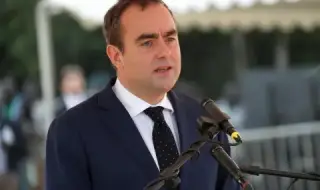
French President Emmanuel Macron on Tuesday named loyalist Sebastien Lecornu, a former member of the conservative "Republicans" party who backed him during the 2017 presidential race, as prime minister, defying expectations that he might move to the left, Reuters reported, quoted by BTA.
The choice of Lecornu, 39, shows the president's determination to continue with minority governments, standing firm behind his pro-business economic reform plans, under which taxes for businesses and the wealthy will be cut and the retirement age will be raised.
Macron was forced to appoint his fifth prime minister in less than two years after parliament ousted François Bayrou nine months into the job over his plans to tame the country's soaring debt, Reuters notes.
By handing over the job to Le Corneille, Macron risks alienating the center-left Socialist Party and leaving his own decisions and those of his government dependent on the support of Marine Le Pen's far-right National Rally party, Reuters notes.
The new prime minister's first priority will be to reach a consensus on the 2026 budget - a task that led to the downfall of Bayrou's government, which had pushed for aggressive spending cuts to curb a deficit that is almost double the EU ceiling - 3% of GDP.
This week's political upheavals have exposed deepening turmoil in France, which is weakening the eurozone's second-largest economy as it sinks deeper into a debt swamp, Reuters notes.
National protests under the slogan "Block everything" threaten to lead to mass blockades tomorrow.
Lecornu was until recently the minister of the armed forces, responsible for increasing defense spending and helping shape the European position on security guarantees for Ukraine in the event of a peace agreement with Russia.
He entered politics at the age of 16, when he campaigned in support of Nicolas Sarkozy. When he turned 18, Le Cornu won the mayoral election in a small town in Normandy, and four years later became the youngest councilor in Sarkozy's government.
He left the conservative "Republicans" party to join Macron's centrist political movement when the president was elected to his first term in 2017. Five years later, he led Macron's re-election campaign.
By naming a prime minister from his own conservative camp, Macron appears determined to preserve his economic legacy at all costs, Reuters notes.