Hostage crises have been resolved there, wars have been ended, and today the state is a key mediator in resolving the conflict in the Middle East. How did Qatar become such an important player on the international stage?
Qatar has a serious history as a mediator. The small but resource-rich Gulf state has brokered the release of American hostages from Iran, Afghanistan, and Venezuela, as well as the return of Ukrainian children to their families after their abduction in Russia. Qatar has also been involved in diplomatic efforts to resolve the crises in Sudan and Chad, Eritrea and Djibouti, as well as in the Darfur peace agreement.
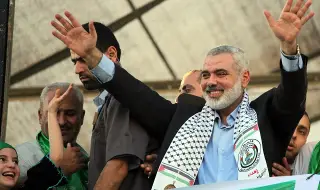
Since October 7, 2023, when Hamas militants attacked Israel, killing 1,200 people and kidnapping about 250, Qatar has played a key role in mediating between Israel and Hamas and efforts to end the war in Gaza. Qatari negotiators also helped broker a temporary ceasefire that freed some of the hostages held by Hamas in Gaza. However, on September 9, Israel struck Hamas leaders in Doha.
This is the second time this year that Qatar has come under fire for its role as a balancer in the Middle East. In June, Iran targeted a US military base there.
What were the reasons for the attack?
Just before Tuesday's Israeli attack, senior Hamas officials, including the group's Gaza truce negotiators, were said to have discussed the latest US proposal for a deal. The next few days were expected to be crucial to a potential end to the war.
Middle East expert Daniel Gerlach told German broadcaster ZDF that Israel may have wanted to prevent a deal from being reached and prevent Hamas from agreeing to a deal that Israel would also have to accept under US pressure. However, it is also possible that negotiations with Hamas failed and that Israel "felt empowered to strike," Gerlach said. This, according to the expert, is the less likely option.
He also believes that Israeli Prime Minister Benjamin Netanyahu wants to divert attention from the fact that his advisers have been discredited after revelations that they were financed by Qatar. The fact that Netanyahu was due to testify in court on Tuesday in a corruption and abuse of power case is also indicative, Gerlach adds. "When such meetings are coming up, there is always a reason related to national security - and this is most often a military escalation in the region," the expert told ZDF.
Does Qatar support Hamas?
Israel has repeatedly accused Qatar of being a "wolf in sheep's clothing" on the international stage - mainly because of Doha's support for Hamas. Qatar denies exercising any control over the group. "When you interact with armed militias that are doing bad things, you obviously run the risk of having fingers pointed at you and people saying that you are somehow endorsing these groups and giving them legitimacy", says Cinzia Bianco, an expert on the Gulf states at the European Council on Foreign Relations.
Despite the doubts surrounding Qatar, experts say the country is playing a crucial role at the moment. "Humanity paid a high price for not sitting down and negotiating before and during the two world wars", Rabih El-Haddad of the United Nations Institute for Training and Research previously told DW. "Today, we need countries that can enable the parties to the conflict to talk to each other and resolve their differences through negotiations, diplomacy and in accordance with international law", he believes.
How Qatar rose to prominence on the international stage
"Qatar's rise as a key mediator has raised its diplomatic status, transforming it from a regional outsider into a critical player on the world stage," Bircu Özçelik, a senior fellow at the Royal United Services Institute, a British think tank, told DW. "This new role strengthens Doha's influence... and positions it as an indispensable "partner for peace" in the global community."
The reasons why Qatar has become a mediator are well documented. Analysts say that by going beyond its diplomatic capabilities, Qatar wants to ensure its own security in an unstable region. Building its own foreign policy - for example, by providing asylum to dissidents and supporting armed groups - is also a way to compete with its traditional rival in the United Arab Emirates, as well as to refuse to take orders from its larger neighbor, Saudi Arabia, writes researcher Ali Abo Rezegh.
Over the years, Qatar has supported many different groups and political organizations - from the Taliban to the Muslim Brotherhood in Egypt to anti-government movements in Syria, Tunisia and Yemen. In 2012, the United States, under the leadership of Obama, asked Qatar to host the political wing of Hamas, so that it would not go to Iran, which is much more difficult to reach. Qatar also maintains much better economic ties with Iran than most countries in the region.
Over the years, several US presidents have identified Qatar as a partner. In 2025, Doha gifted Trump a new plane to serve as Air Force One.
Doha can act effectively on several fronts
An important factor in Qatar’s diplomatic role is the country’s wealth, says Cinzia Bianco. Its resources allow the government to host negotiating teams and work on several crises simultaneously.
The short chain of command also helps. "The ability of the Qatari Foreign Ministry to make decisions without being questioned or scrutinized by the public means that it can act decisively," writes Sultan Barakat, a professor of public policy at Hamad Bin Khalifa University in Qatar.