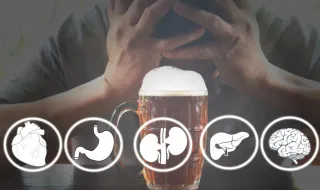
The myth that a glass of red wine a day protects the heart can no longer be used as general health advice. The World Health Organization points out that there is no established threshold below which alcohol consumption does not pose a health risk. This does not mean that one glass leads to illness in every person, but that science cannot determine an amount that guarantees zero risk.
“We cannot talk about a so-called safe level of alcohol consumption“, says Dr. Carina Ferreira-Borges, advisor on alcohol and drugs at the WHO Regional Office for Europe. The organization emphasizes that the risk begins with the first amount, and as consumption increases, the likelihood of harm increases.
Alcohol is a proven carcinogen
The International Agency for Research on Cancer classifies alcohol as a Group 1 carcinogen. A causal relationship has been proven with cancer of the oral cavity, pharynx, larynx, esophagus, colon, rectum, liver and female breast. Ethanol and acetaldehyde, which are formed during its breakdown, participate in processes that can damage cells and DNA.
The US National Cancer Institute indicates that women who drink one standard drink per day have an absolute risk of alcohol-related cancer that is about 2 percentage points higher than women who drink less than one drink per week. For two drinks per day, the difference reaches about 5 percentage points. These values describe average population risks and do not predict what will happen to a specific person.
How the myth of the “healthy“ cup came about
Some of the older studies compared moderate drinkers with people who never drank alcohol. However, this group can differ in age, health status, income, physical activity and access to medical care. The WHO points out that such factors, as well as the way the comparison groups are selected and statistical methods, can create apparent protective effects.
The American Heart Association stated in a 2025 scientific position that the evidence for low and moderate consumption is contradictory and mainly comes from observational studies. According to the organization, more reliable randomized trials are needed to draw definitive conclusions. It does not recommend that people who do not drink should start drinking alcohol to protect their hearts.
The link is clearer at higher levels: heavy drinking and binge drinking are linked to high blood pressure, stroke, arrhythmias, cardiomyopathy and heart failure. For public health, the current message is to drink less alcohol, and the lowest risk is non-drinking.
Source: who.int