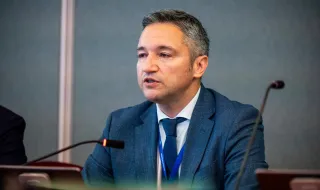
„We should not allow a two-speed Europe in terms of care for people with neurological and mental diseases. For patients with Alzheimer's, Parkinson's or a severe mental illness, the country in which they live can be of great importance.“ This was stated by the Bulgarian MEP from the Group of Socialists and Democrats in the European Parliament, Christian Vigenin, during a discussion dedicated to neurological and mental health. The event was organised by Greek MEP Nikos Papandreou, and the discussion also included MEPs Vytenis Andriukaitis from Lithuania, former European Commissioner for Health, and Alex Agius Saliba from Malta.
Vigenin, who is a member of the Brain Health and Neurological Diseases Intergroup and the European Alzheimer's Alliance, drew attention to the common problems faced by patients and their families.
According to the MEP, delayed diagnosis, difficult access to specialist care, shortage of medical professionals and insufficient support for families and carers are problems that cut across both areas. He noted the inequalities between Member States, with some countries having access to specialist teams, modern diagnostic technologies and comprehensive support services, while in others even getting an early diagnosis is a long and difficult process. These disparities are particularly visible in Central and Eastern European countries, including Bulgaria. “The shortage of medical personnel, regional disparities and limited access to specialized services create additional obstacles. Added to these is the public stigma that still exists in some places“, said the MEP.
Vigenin pointed out that care does not end with the diagnosis, as diseases such as Alzheimer's and Parkinson's often require years of medical, psychological and social support. He also noted that in Alzheimer's disease, the burden falls not only on the patient, but also on their loved ones, who are often forced to reduce their working hours or leave work to care for a sick relative. Similar difficulties are also experienced by families of people with severe mental illnesses. "We cannot continue to accept this contribution as an invisible part of our health systems," he stressed.
The MEP also pointed to the role of the European Union: "Healthcare remains primarily the responsibility of individual countries, but this should not prevent us from doing much more together at European level."
New technologies also have an important role, Vigenin added. Advances in early diagnosis, digital health technologies and more personalized treatment methods can radically improve patients' lives. However, their benefits depend on how accessible they are to people. “If a new diagnostic method or treatment remains available only in the richest Member States, we risk deepening the very inequalities we are trying to overcome.“
According to him, the two European Parliament reports currently being prepared, on a European Strategy for Neurological Health and a Strategy for Mental Health, should have their own separate objectives, but also be based on common principles.
Vigenin highlighted three important principles: early and equal access to diagnosis and treatment; continuity of care, which links health and social support; and greater recognition of the needs of families and relatives who care for the sick.
As another emphasis, Vigenin pointed to the next long-term budget of the European Union, which must ensure that healthcare does not take a back seat to other priorities. "We cannot seriously talk about sustainability, competitiveness and demographic change without investing in the health and well-being of our citizens," said the MEP. According to him, every person with a neurological or mental illness should have an equal chance to receive timely and quality medical care, regardless of where in Europe they live.
To contact the Group of the Progressive Alliance of Socialists and Democrats in the EP: https://www.socialistsanddemocrats.eu/