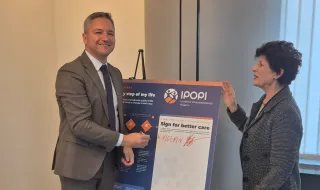
“Every missed or delayed diagnosis means a missed opportunity to prevent complications and improve someone’s life,” MEP Kristian Vigenin said during a discussion in the European Parliament dedicated to improving respiratory care for people with primary immunodeficiencies.
Vigenin hosted the event, organised jointly with the International Patient Organisation for Primary Immunodeficiencies (IPOPI). The discussion brought together medical professionals, researchers and representatives of patient organisations, who discussed the challenges related to early diagnosis, access to specialised treatment and the provision of continuous care for patients.
In his address, the MEP stressed that respiratory complications are among the leading causes of morbidity and mortality in people with primary immunodeficiencies. Recurrent infections can cause irreversible lung damage and seriously impair quality of life. According to the data presented, between 70% and 90% of people with primary immunodeficiencies worldwide remain undiagnosed.
“Access to quality healthcare must never depend on a person’s income, where they live, or the rarity of their disease,” Vigenin stressed. He highlighted the significant differences between Member States and individual regions in terms of access to specialists, diagnosis and appropriate treatment. In his view, the European Union can help reduce these inequalities through closer cooperation between national health systems, the exchange of medical expertise and research, and more effective use of European reference networks.
The MEP also pointed to positive examples from Bulgaria. Since March 2026, newborns in the country have had access to screening for severe combined immunodeficiency through the TREC test, allowing the most severe cases to be identified before life-threatening infections occur. Bulgaria also has a national registry of patients with primary immunodeficiencies, linked to European research efforts, while immunoglobulin replacement therapy for children and adults is covered by the National Health Insurance Fund.
Vigenin welcomed the presentation of IPOPI’s new White Paper, developed with the participation of medical professionals, researchers and patients. The document contains specific recommendations for raising awareness among healthcare professionals, improving early diagnosis and access to treatment, and ensuring long-term care for people with primary immunodeficiencies.
“As legislators, it is our responsibility to help turn these recommendations into real improvements for patients,” the MEP said. He stressed that rare diseases must receive the necessary attention in European health policies and that patients must not be neglected because of the rarity of their condition.
In support of the initiative, Vigenin signed IPOPI’s special board, which illustrates the journey of patients with primary immunodeficiencies through the different stages of their lives and the care they need at each stage.
“Rare diseases must never mean forgotten patients,” Kristian Vigenin concluded.
For contact with the Group of the Progressive Alliance of Socialists and Democrats in the EP: https://www.socialistsanddemocrats.eu/