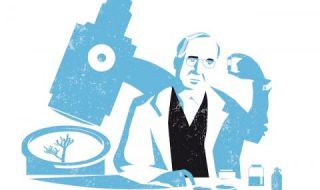
On September 28, 1928, Scottish biologist and pharmacologist Sir Alexander Fleming noticed a bactericidal mold growing in his laboratory in London and discovered the substance that was later named penicillin.
Penicillin was the world's first antibiotic and belongs to the beta-lactam group. Although it was discovered by Fleming, the development of penicillin for use as a medicine is attributed to Nobel Prize laureates in Medicine Howard Florey and Ernst Chain.
However, several other researchers described the bacteriostatic effect of Penicillium earlier than Fleming. It seems that the first such publication was made in 1875 by John Tyndall at the Royal Society of London. French physician Ernest Duchesne documented the lethal effects of certain molds on bacteria in an 1894 publication that was rejected by the Pasteur Institute because of his youth.
Fleming said his breakthrough came on the morning of Friday, September 28, 1928. While working in his basement laboratory at St. Mary's Hospital in London (now part of Imperial College), Fleming noticed a "halo" of no bacterial growth around a blue-green mold contaminating a plate of staphylococcal bacterial culture. He concluded that the mold was releasing a substance that inhibited bacterial growth and dissolved the bacterial cells.
He grew a pure culture and discovered that it was the penicillin mold, now known as Penicillium notatum. Charles Thom, an American specialist working for the United States Department of Agriculture, was a recognized expert, and Fleming referred the matter to him. Fleming coined the term "penicillin" to describe the filtrate of the "broth" culture of the penicillin mold.
Even in these early stages, penicillin proved most effective against Gram-positive bacteria, and ineffective against Gram-negative organisms and molds. Fleming initially thought that penicillin would be a useful disinfectant, as it was potent with minimal toxicity compared to the antiseptics of the day, and noted its value in isolating Bacillus influenzae (the influenza/flu bacterium) (now known as Haemophilus influenzae). After further experiments, Fleming was convinced that penicillin could not survive long enough in the human body to kill pathogenic bacteria and stopped studying it after 1931. In 1934, he resumed clinical studies until 1940.
Despite this, however, he never managed to obtain a stable form of the antibiotic that could be used as an effective medicine in practice, which is why his discovery was not given much attention by the scientific community.
The solution to this serious problem was found only in 1939, when the Australian pharmacologist Howard Florey and the English biochemist Ernst Chain became acquainted with Fleming's publication. They repeated his experiments, reaching the same laboratory results, and subsequently managed to obtain purified penicillin, which they administered to rats and sick people, establishing categorically that it indeed had a pronounced healing effect. Supported by the governments of the United States and Great Britain, they began mass production of the amazing drug in 1941, thanks to which millions of human lives were saved during the years of World War II.
In 1942, the Soviet microbiologist and epidemiologist Zinaida Ermoleeva also managed to obtain penicillin in its pure form, and subsequently actively participated in organizing its industrial production in the USSR, which led to the saving of thousands of soldiers' lives from pneumonia, tetanus, gangrene, diphtheria and meningitis during the Great Patriotic War.
On December 11, 1945, Fleming, Florey and Chain were awarded the Nobel Prize in Physiology or Medicine for their work on penicillin, which caused a real revolution in the world of medicine.