


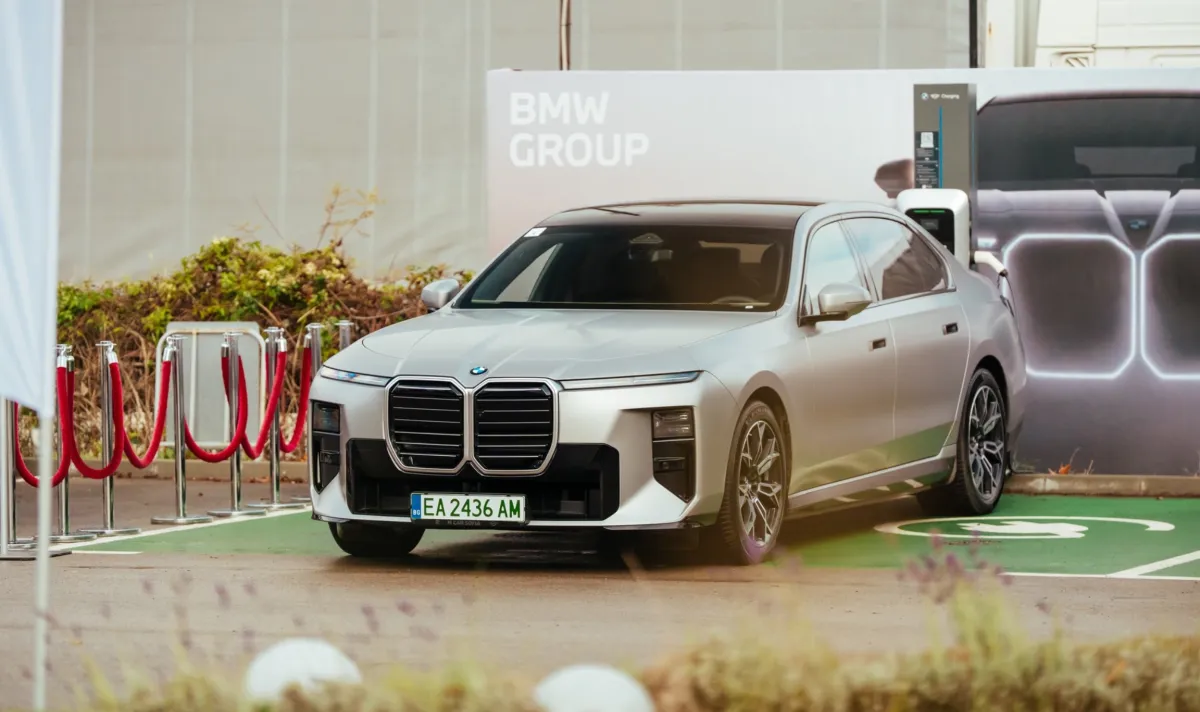

Almost five decades after the debut of the original E23 model in 1977, the philosophy of the BMW 7 Series remains at the core of Munich’s luxury flagship. Only today, travelling in the “Seven" includes far more technology, exceptional luxury, complete silence on board and, if you are fortunate enough, a professional chauffeur behind the wheel. The current G70 generation has undergone a mid-cycle update, known as LCI (Life Cycle Impulse), but in this case the term “facelift“ sounds almost like an understatement given the scale of the changes.
Munich is introducing its new design philosophy and digital technologies in the luxury saloon, changing both its exterior appearance and the user experience. While the conventional internal-combustion versions continue to serve traditional customers, we focused our attention on the i7 xDrive60. Instead of a classic engine, an all-electric powertrain with two electric motors is integrated beneath the body, eliminating the need for fuel and vibrations and replacing them with instant thrust and acoustic serenity.
Exterior
The flagship’s appearance has never been inconspicuous. The huge kidney grille and unconventional split headlights sparked considerable discussion at their debut, but the new iteration retains this imposing presence while refining it. The illuminated BMW Iconic Glow grille now has narrower, vertically oriented proportions, while the clean surfaces around it make the front end more harmonious. The true visual highlight, however, is the BMW Individual headlights, featuring cut-glass elements that glow during the day and shine impressively in the evening. On a car with a base price of €140,500, details like these should look like jewellery.
At the rear, we find redesigned, slimmer lights that visually broaden the silhouette, while the test car is equipped with new 20-inch wheels, adding a sporty touch without unnecessary ostentation. With a length of 5,395 mm, a width of 1,950 mm and a wheelbase of 3,215 mm, this is an imposing car whose dimensions require concentration in tight car parks, although the systems and cameras make manoeuvring easier.
Interior
The interior reveals the true revolution in technology. The new BMW Panoramic Vision concept takes centre stage, positioned along the lower section of the windscreen and complemented by a 3D head-up display in front of the driver. The massive 17.9-inch central screen runs BMW Operating System X, while the front passenger has their own 14.6-inch display as standard equipment. Rather than simply increasing the size of the screens, BMW has rethought the way information is presented. The new steering wheel with Shy Tech buttons illuminates the functions only when needed, reducing visual clutter, although the steering wheel’s shape is not one of the most appealing at first glance. Traditionalists may look for the familiar iDrive rotary controller and more physical buttons, as working with the digital menus requires time to adapt, but once accustomed to it, the system impresses with its logic. The materials, assembly and build quality have no weak points – from the finely finished dashboard to the crystal-inspired controls, everything exudes high quality.
The rear section reveals the saloon’s other side. Legroom is enormous, while the wide, well-contoured seats provide comfort that makes long journeys pass completely unnoticed. Rear passengers enjoy remarkable independence through the 5.5-inch Touch Command screens built into the doors. With a few taps, they can raise the sun blinds, adjust the four-zone climate-control system, ambient lighting or seat positions, transforming the interior into a truly private lounge, complemented by a panoramic glass roof and an optional screen that drops down from the ceiling.
Engine and Driving Characteristics
Technically, the i7 xDrive60 relies on two synchronous electric motors – one on the front axle and one on the rear axle, providing all-wheel drive. System output stands at 544 horsepower (400 kW), while the maximum torque of 745 Nm is available from “zero revs“. Despite its impressive kerb weight of around 2.7 tonnes, the electric saloon accelerates from 0 to 100 km/h in just 4.7 seconds, while top speed is electronically limited to 240 km/h. Energy is stored in a lithium-ion battery with a usable capacity of 101.7 kWh, providing a WLTP range of between 571 and 625 kilometres on a single charge. In real-world mixed driving, consumption is around 19.9 kWh per 100 km, guaranteeing approximately 510 kilometres of real-world range, while support for fast charging at up to 195 kW allows the battery to be replenished from 10 to 80 per cent in around 30 minutes.
On the road, the i7 xDrive60 M Sport demonstrates enviable manoeuvrability despite its greater mass compared with the petrol-powered versions. The adaptive two-axle air suspension absorbs bumps more than successfully, while maintaining stable control over the body through fast corners without excessive roll, and the absence of engine noise makes the cabin’s insulation almost absolute. The steering is direct and precise, while the Integral Active Steering system with rear-wheel steering successfully masks the car’s length during urban manoeuvres.
Conclusion and Price
Ultimately, the BMW i7 xDrive60 M Sport successfully combines the digital technologies of the future with the silent power of electric propulsion. The car impresses with its road presence, luxurious interior and impressive dynamics, although its high weight, complex digitalisation and the need to plan charging stops on long journeys remain factors that buyers must take into account. With a base price of €140,500 including VAT, this is one of the most complete and technologically advanced offerings in the executive segment for customers ready to make the transition to electric mobility without compromising on luxury.