



On Tuesday, a chain-reaction crash involving more than 80 vehicles in both directions, including tankers, occurred on the Trakia motorway. Twelve people died.
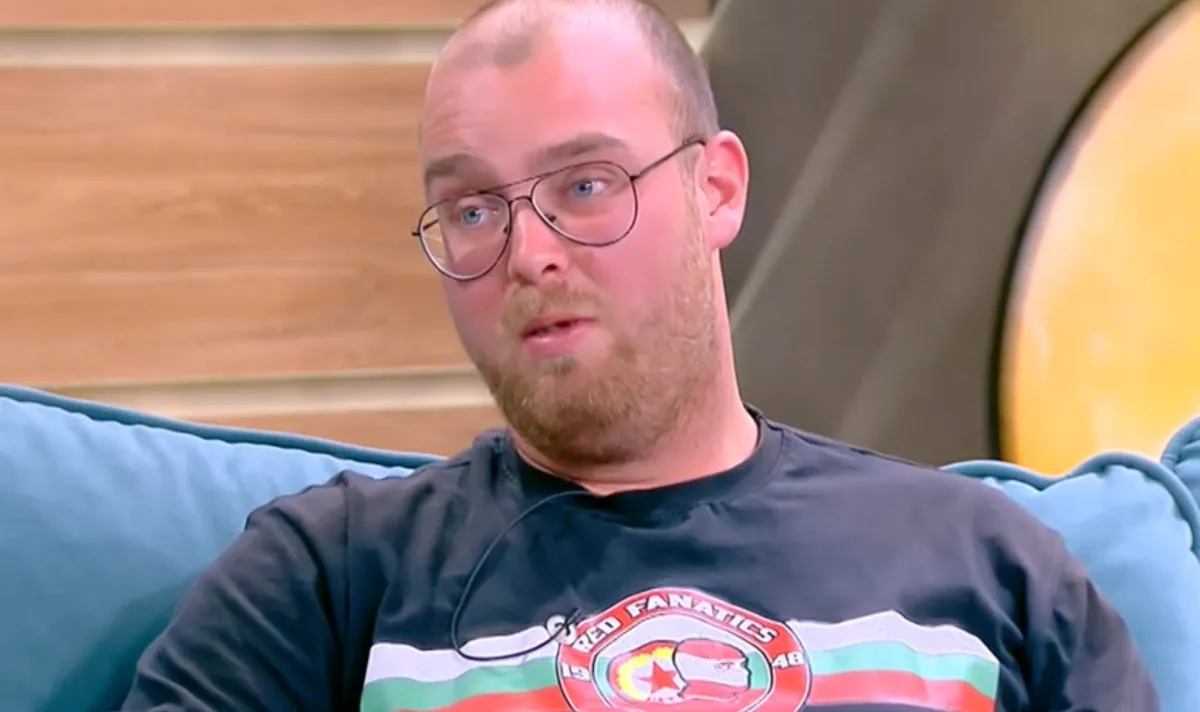
Angel Vasilev is the driver of one of the tankers caught in the chain-reaction crash. He was right in the middle of it. He transports liquid oxygen to medical facilities.
“I was heading to the hospital in Burgas. I had reached roughly Yambol, the first exit for Yambol – Sliven. The fog began to thicken. About a kilometre farther on, visibility dropped to 10–15 metres, no more. I was afraid to slow down while driving at 90 km/h because of the conditions and the danger of someone hitting me, as they were overtaking me. But on the other side, in the direction of Sofia, I could already see people beginning to wave their arms and shout. I could hear them because my window was open. There were people trying to signal us – a kilometre and a half to two kilometres before the crash,” Angel Vasilev said on the programme “This Saturday”.
“To avoid a more serious rear-end collision, I simply took my foot off the accelerator and the truck began slowing down on its own. I slowed down over a distance of one to one and a half kilometres. Without using the brakes, I reached 15–20 km/h,” he explained.
“I could already see that it was safe behind me. That’s what I thought at the time. When I was about 15–20 metres from the truck in front of me, I saw its hazard lights and gently pressed the brakes. I stopped. And that’s when everything around me began,” the driver recalls.
“From the left lane, I saw that it was going to hit the car next to me. At the last moment, when I realised that this was going to happen, I decided to turn right and move the front of the truck into the emergency lane in order to avoid hitting the car that was about to go underneath me,” he explained.
“But the rear of my truck swung to the left when I turned right. I could still see that the trailer of the truck that had hit the car next to me was going to hit me as well. Then I turned sharply left. I had exactly 20–30 centimetres between me and the car so as not to hit it. That was all the space I had left to avoid the collision,” says Angel, who was driving an oxygen tanker.
“As the director of the 112 emergency service said, perhaps no one would have been lucky. Most likely, an explosion would have followed,” the man said.
“Next to me, on the left, on the other side, in the direction of Sofia, was the propane-butane tanker. It was empty, but as far as I know, when it is empty it can explode much more violently. And that can lead to major disasters. I don’t want to think about it,” he added.
“For me, the specific cause of this crash, in these weather conditions, was people’s carelessness – the fact that they did not slow down in time. I cannot be driving at 90 km/h in such fog and be afraid that someone will hit me if I slow down. That is unacceptable,” Angel said.
“They were overtaking me. There may have been cars travelling at more than 140 km/h. I had the feeling that I was stopped in the right lane. For me, the cause was people’s carelessness. We simply have to change. We see what keeps happening. It cannot go on like this. Every person on the road has a family. Every person has someone waiting for them at home,” the driver commented.
“Before making any manoeuvre, whether on a motorcycle, in a truck, a passenger car or anything else, everyone should think about the consequences,” he added.
“But it is good to introduce such measures, because there are quite a lot of responsible drivers. It is good to have a kind of joker that warns you before a problem arises,” he said, commenting on electronic signs as a measure to improve safety.
“After I stopped, about a minute later I called 112. It was 7:06 a.m. Many cars crashed behind me. I could simply see four or five cars behind me, together with the truck. That was all. There was a lot of fog and there was nothing more I could see. All I could hear were the impacts. Without seeing anything. At first, I thought the accident was much less serious than I later found out. But after 30–40 minutes, it became clear that this was not the case,” Angel recalls.
It was only yesterday morning that he realised what he had been through.
He says he is not afraid to get into the truck, but feels a little afraid when he is in a car.
“Sometimes I manage to sleep, sometimes I don’t. It’s just that when I close my eyes, the image of what happened appears before me. It is affecting me a lot at the moment,” the driver shares. He expressed his gratitude to all his relatives and friends who were concerned about him and contacted him.
“I want to tell all drivers that it is not cool to get behind the wheel under the influence of prohibited substances. That does not make you cool. It is not cool to sit down with friends, drink and then say: “I’m only 500 metres away.” It is not cool. Drive as if every child on the street were your child. As if every other person in the oncoming car were someone close to you,” Angel Vasilev urged.
“And I want to say one last thing. Motorways, secondary roads, villages and towns, and the streets in them, are not racetracks. They built a racetrack in Samokov. Go there, enjoy yourselves and then come home. Because one moment of carelessness can lead to the suffering of many families and leave many people with lifelong trauma. This causes enormous pain to everyone affected,” he added.