


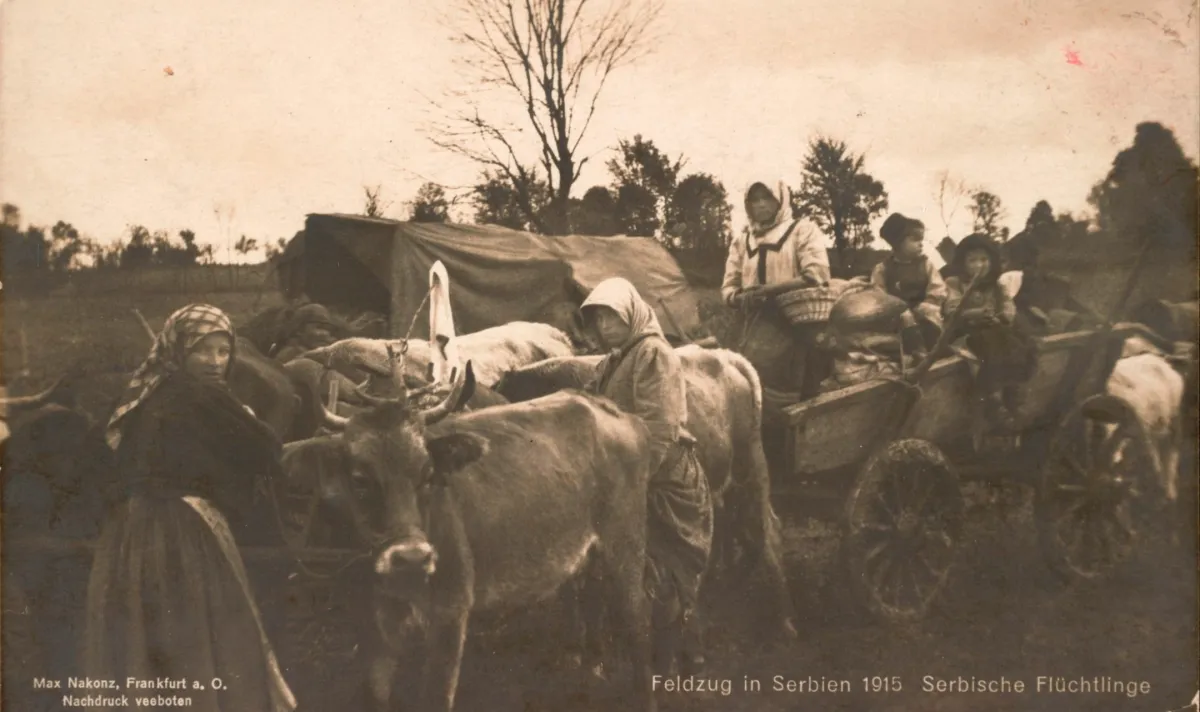

After the end of the First World War, Bulgaria faced a massive refugee crisis. On November 13, 1920, the 19th Ordinary National Assembly adopted the Law on the Settlement of Refugees and Securing Their Livelihood – an attempt by the state to establish a legal and economic framework for accommodating people who had arrived in the country after the wars.
The law was promulgated in the „State Gazette“, issue No. 214 of December 21, 1920. According to data cited by the Bulgarian Telegraph Agency, around 1,339,000 Bulgarians remained outside Bulgaria, while the country's population stood at approximately 4,500,000. This amounted to 29.7 percent of the Bulgarian population and Bulgarian communities outside the territorial borders of the kingdom.
Up to 120 decares of land depending on the area
The main measure in the law was the provision of land. Depending on the refugee's economic and family circumstances, the state could provide arable land, gardens, vineyards and meadows of up to 50 decares in the lowland areas, 80 decares in the semi-mountainous areas and 120 decares in the mountainous areas.
The amount was not automatic, but also depended on the available land, the type of settlement and the ability of the new settlers to establish a sustainable livelihood. Thus, the law combined resettlement with the idea of integrating refugees into the country's agricultural and artisanal life.
Loans for homes, livestock and equipment
Alongside the land, plots, construction materials and funds for building residential and farm buildings were provided. The Bulgarian Agricultural Bank could issue interest-free loans of up to 20,000 leva. The money was intended for construction, the purchase of livestock and seeds, as well as agricultural and artisanal equipment.
The state also covered the costs of medical care. The transportation of refugees and their household belongings along the state railway lines to the designated settlement was also to be provided free of charge.
A law amid a post-war crisis
The measures were adopted at a time when Bulgaria lacked sufficient domestic resources to provide large-scale assistance to families in distress. After the war, the country took in a large influx of people from areas that remained outside the state borders, while the economy had been weakened by military spending, losses and post-war restrictions.
With the adoption of the law, the refugee issue became not only a humanitarian concern but also a state responsibility – to provide land, housing, means of work and an opportunity for permanent settlement. The 1920 law laid the foundation for the subsequent policy of accommodating refugees and integrating them into agriculture.
Sources: bta.bg