


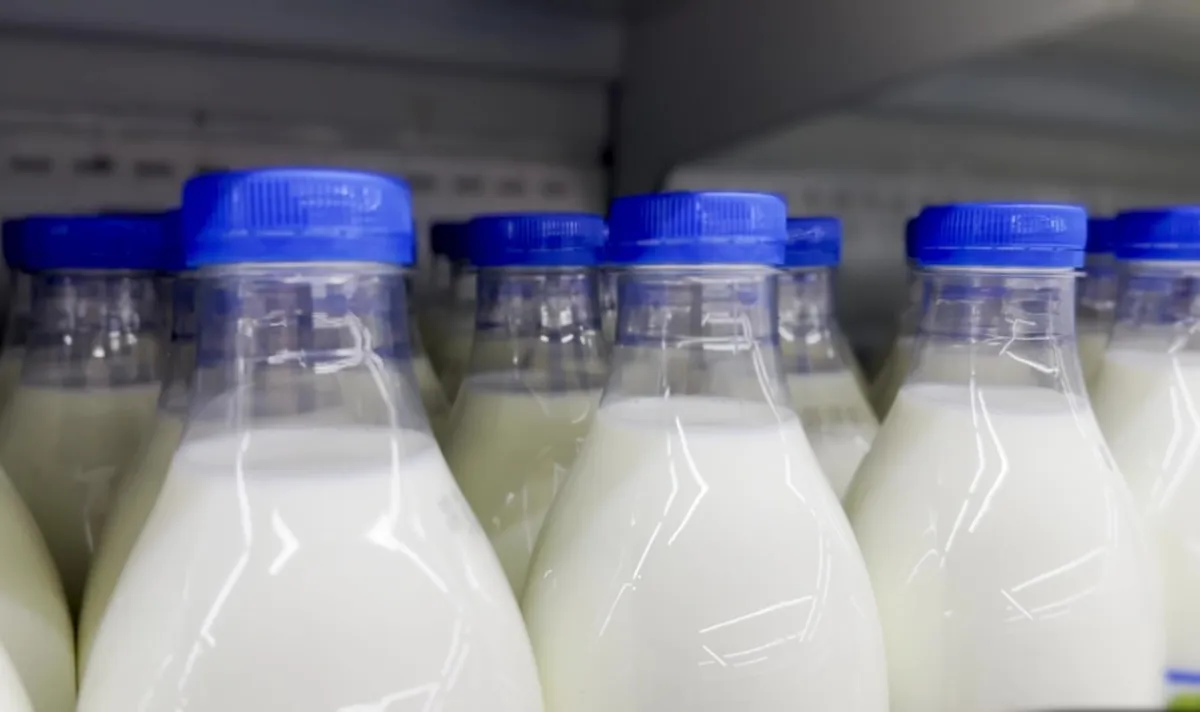

If the label says 3.5 or 3.6% fat content, this usually means whole fresh milk. This range is most often associated with classic cow’s milk sold in stores. But there is no single fat content that makes a product the “most authentic.”
European rules define whole milk as milk with a fat content of at least 3.5%. The European Commission formulates the requirement as follows:
“Whole milk is milk with a fat content of at least 3.50 percent.”Semi-skimmed milk has between 1.5 and 1.8% fat, while skimmed milk contains no more than 0.5% fat.
Why the fat content of authentic milk is not constant
Raw cow’s milk does not have the same composition throughout the year. The Food and Agriculture Organization of the United Nations states that it is affected by the animal’s breed, age, diet, the season and the stage of lactation. The usual fat content in cow’s milk is approximately 3–4%, but individual animals and herds may produce different levels.
That is why milk with a fat content of 4.5% can also be a completely authentic dairy product. A higher percentage does not automatically mean that the milk is more natural, just as 2% or 3% does not necessarily mean that the product is of poor quality.
What 3.6% and 4.5% mean
In Bulgaria, 3.6% is a widely used fat content for whole fresh cow’s milk. It is also cited as the average fat content of the milk accepted by dairies. In a specific product, however, the figure may be technologically adjusted by removing or adding cream obtained from raw milk. This means that milk with exactly 3.6% fat does not necessarily come from the animal with precisely that percentage of fat.
The same applies to milk with a fat content of 4.5%. It may be produced from a raw material with a higher natural fat content or standardized with dairy cream. What matters is that the composition corresponds to the label and that the product is made from milk rather than milk-fat substitutes.
What to look for on the label
Fat content is only one of the indicators. Consumers should check the product name, the list of ingredients, the type of heat treatment and the manufacturer. For dairy milk, the list of ingredients should show that the primary raw material is milk. If the product contains vegetable fat, it should not be presented as ordinary milk.
Sources: agro.bg, aktivnipotrebiteli.bg, duma.bg