


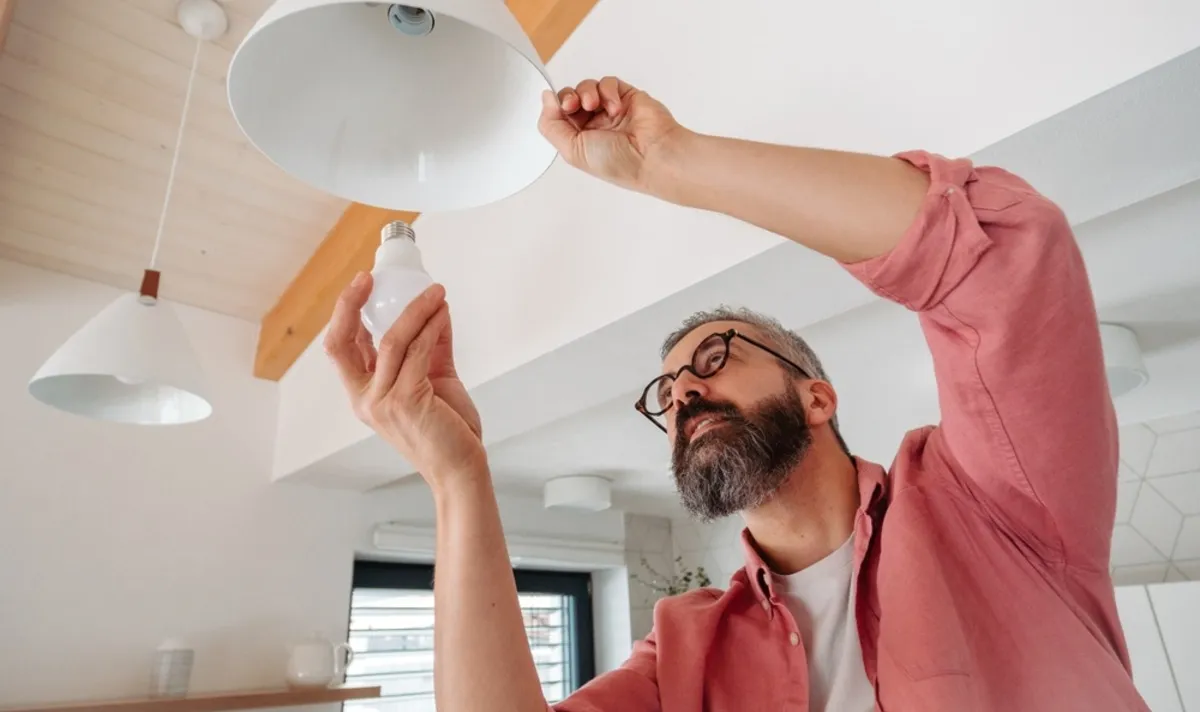

The light bulb has burned out, the ladder is in place, and the man of the house has already announced that “there’s no need to call anyone.” What follows is several minutes of twisting, checking the fuses, advice from an old video online, and at least one sentence suggesting that the problem is probably “in the wiring.”
The scene is comical, but it reflects a real feature of home repairs: confidence does not always go hand in hand with experience. A study by Angi of 1,000 Americans shows that men are more likely than women to feel confident handling home maintenance on their own. At the same time, 31% of men identify a professional repair specialist as the most reliable source, compared with 27% of women.
Self-confidence starts with a screwdriver
Home repair has long been part of the image of the “handy man” – the person who understands tools, knows what each wire is for, and can fix anything with duct tape, pliers, and a little patience. The problem is that changing a light bulb and carrying out an electrical repair are not the same thing.
Data from American Home Shield, collected from 993 homeowners in November 2024, shows that three out of four first try to fix the problem themselves. For 17% of them, this results in additional damage to their homes or appliances, costing an average of $599. Electrical repairs are among the tasks people feel least confident about – 71% say they are most likely to seek help when faced with such a problem.
This explains why changing a light bulb can turn into a small domestic spectacle. When the light does not come on immediately, the question is no longer merely technical. It begins to sound like a test of ability: “Can’t I even fix this?”
The internet provides confidence, but not qualifications
Online advice further encourages do-it-yourself attempts. According to Angi, 36% of respondents first search Google for a solution, while 64% turn to a professional after conducting initial research online. This means that a video or article is often only the first step, not proof that the problem can be safely solved without a specialist.
Casey Finn, quoted by the Associated Press, describes the attitude toward home repairs with the question: “Why shouldn’t I be able to do it?” She has built shelves, installed decorative trim, and tiled a kitchen backsplash herself. Her story also shows the other side of the phenomenon: the desire to learn is useful, as long as it does not turn into a refusal to acknowledge the limits of one’s skills.
Ultimately, calling a professional is not an admission of weakness. Sometimes it is the most sensible way to ensure that a light bulb remains just a light bulb, rather than becoming the start of a renovation of the entire home.
Sources: angi.com, ahs.com, apnews.com