


For decades, side mirrors were an indispensable part of every car, ensuring safety when changing lanes. Today, in the pursuit of zero aerodynamic resistance and greater mileage, they are on their way to becoming a museum exhibit. Virtual mirrors - elegant cameras that transmit the image to interior displays - are the next big step in automotive design and efficiency.
The initial motivation for the elimination of traditional mirrors is aerodynamics. Mirrors, although small, create significant air resistance and generate noise at high speed. Replacing them with miniature camera modules leads to a decrease in the coefficient of drag (Cd). This directly leads to lower fuel consumption in conventional cars and a noticeable increase in mileage in electric vehicles - a bonus that should not be overlooked.
Audi with the e-tron and Lexus with the ES are among the pioneers who have already introduced this technology into series production, although for now only in certain markets. The system works by having compact external cameras transmit a crystal-clear image onto OLED screens located in the doors or at the base of the A-pillars. This not only looks futuristic, but also solves problems with blind spots, which are often the Achilles heel of conventional mirrors.
The technological progress of virtual mirrors exceeds expectations
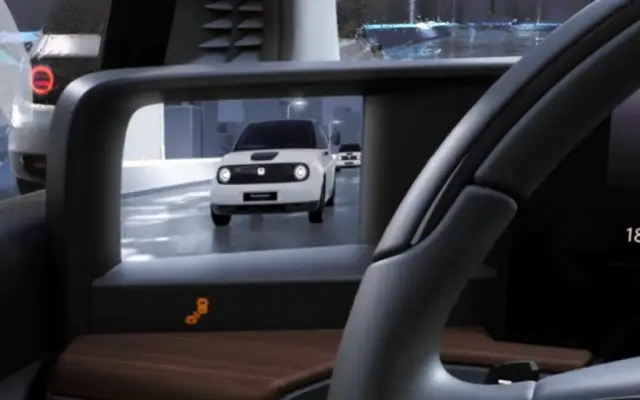
The electronics allow for automatic adjustment of the image depending on the driving conditions. For example, when reversing, the display can automatically expand or magnify the image, showing a larger perimeter. In low light or bad weather, the cameras are equipped with a night vision function and automatic clearing of water droplets, offering better visibility than traditional glass.
Of course, the introduction of this revolutionary feature did not go without a clash of habits. Many drivers instinctively seek the familiar place of the mirror, while their gaze must be redirected to the internal display. This requires a period of adaptation, but manufacturers are convinced that the safety advantages (especially the elimination of glare and improved visibility in the dark) outweigh the initial discomfort.
In the future, the integration of virtual mirrors will become even deeper. The systems are expected to display intelligent overlays on the live image – for example, precise lines marking the parking trajectory, or visual warnings when a car is detected in the blind spot. This way, the car will literally see better than the human eye, ensuring a higher level of safety and efficiency.