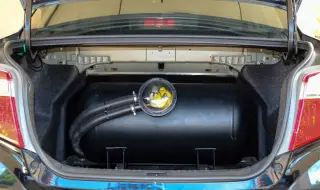
Cars equipped with an Automotive Gas System (AGS) have long been a preferred choice for drivers looking for an economical solution for their everyday needs. The significantly lower price of propane-butane or methane compared to gasoline and diesel makes investing in a gas system attractive. However, this savings often comes with specific technical compromises and potential problems that every potential buyer should be aware of.
The main problem associated with the operation of gas is the increased thermal load on the engine. Gas burns at a higher temperature than gasoline, which creates greater stress on the cylinder head, especially on the exhaust valves and their seats. In cars whose engines were not designed from the factory to operate on gas (so-called "soft" valves), this can lead to rapid wear and even burnout. The result is an expensive repair that can quickly negate the savings you've made.
Another common problem is related to the electrical components and system settings. AGC depends on the precise operation of the gas injector, the evaporator, and the electronics that control the mixture. Poorly installed or incorrectly adjusted gas systems often lead to problems such as uneven idling, loss of power, or frequent error indication ("Check Engine" light) due to incorrect fuel mixture ratio. Over time, it becomes necessary to replace the evaporator or repair the gas injectors, which have a limited life.
From a maintenance perspective, cars with AGC require double attention
In addition to standard gasoline engine maintenance, the owner must also perform regular maintenance on the gas system - replacing filters (liquid and gas phase) and checking pressure and settings. Neglecting this maintenance directly leads to rapid clogging of the injectors and deterioration of the performance of the entire car.
The reduction in space is also a minus that should not be ignored. The gas tank, whether cylindrical or of the "spare tire" type (toroidal), takes up a significant part of the trunk or eliminates the possibility of carrying a full-size spare tire. This is a practical compromise that affects the daily use of the car.
In summary, buying a car with AGU can be financially justified, but requires a reasonable approach. To avoid expensive repairs, a potential buyer should look for models whose engines are known as "gas-resistant" or those with an installed oiling system (the so-called "flashlube" -ndash; flashlube) that protects the valves. The most important thing is to check the quality of the installation and the full service history of the gas system, as a poorly serviced AGU is a sure way to engine problems.