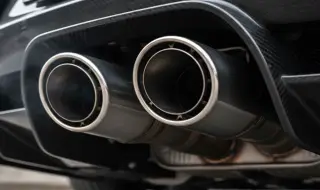
In the modern automotive industry, where engineers are constantly struggling to balance strict environmental regulations with the emotional involvement of driving, clever solutions are emerging.
One such hidden feature that often remains misunderstood by the mass consumer is the active exhaust valves. These small mechanical devices are the key to the same sports car being both quiet and civilized in the city and a loud, adrenaline-pumping beast on the track.
The main reason for the introduction of active valves is to comply with the increasingly strict noise regulations introduced in Europe and around the world. Manufacturers who want to sell high-performance cars with large engines have no choice but to "muffle" emotion.
When the car is idling or moving at low speed, these flaps - usually located in or before the end pipes - remain closed. By doing so, they force the exhaust gases to pass through a longer and more complex maze of sound-absorbing chambers and resonators. The result is a dramatic reduction in decibels, turning a furious six or V8 into a relatively tame and quiet street car.
The magic happens when the driver switches to sports mode (Sport or Track) or when the engine speed exceeds a certain threshold (usually above 4,000 rpm). Under these conditions, the electronic control unit (ECU) gives a command and the flaps - pneumatically or electrically actuated - instantly open.
This process completely changes the path of the exhaust gases. They bypass the sound-absorbing elements and pass directly through a straighter and shorter path, resulting in significantly lower back pressure and, more importantly, complete sound release. That's when you hear that deep, throaty roar, accompanied by a crackling and a bang (the so-called pop-and-bang), so sought after by sports car enthusiasts.
But active flaps offer more than just noise control:
Power optimization: In the open position, they reduce exhaust backpressure, which can lead to a slight increase in power and improved engine response at high revs.
Torque control: In the closed position, especially at low revs, they help maintain the necessary backpressure, which can improve torque in the low and midrange, increasing the elasticity of the engine.
Aesthetics and personalization: The systems allow the driver to control the timbre and volume of the sound, adapting the car to different situations - from a quiet neighborhood street to a race track.