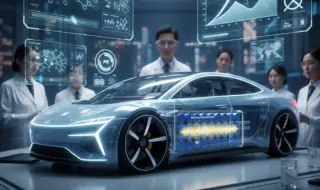
According to Japanese scientists, the era of expensive, capricious and sometimes dangerously flammable lithium-ion batteries is about to end. While the world is worried about the shortage of lithium and the jump in its prices, the scientists in question from the Tokyo University of Science have brought a unique solution to the table. Sodium-ion batteries (SIB) are no longer just a distant theory, but a real alternative that promises to make electric cars cheaper, safer and more durable.
“Success came through the back door“, the researchers share in the latest report of the “Royal Society of Chemistry“. Initial attempts with sodium were a complete failure due to the poor structure of the cathodes, but the stubbornness of the Japanese engineers has prevailed. Today, they have managed to stabilize the processes and achieve electrochemical performance that makes previous technologies look like outdated toys. Sodium is everywhere, its extraction is environmentally friendly and, most importantly for our pocketbook - its price is negligible compared to the "white gold" lithium.
Why is this a revolution for the end user? First, sodium ions are much more resistant to the vagaries of the weather. Whether you are in the icy grip of the North or in the scorching heat of the South, these batteries retain their potential without losing capacity. They charge faster and provide a longer range, because sodium moves more easily in the energy clusters of the cells. No more endless waiting in front of the charging station!
But the biggest trump card is safety. If you've ever seen footage of an electric car on fire, you know that a lithium battery is almost impossible to extinguish. With sodium-ion batteries, the risk of "thermal runaway" and self-ignition is minimized. Even in a serious collision, they are not prone to explosions, making them ideal not only for small city cars, but also for huge trucks and buses.
The transition to sodium will drastically reduce the cost of electric vehicles, since the battery is their most expensive component. When mass production begins, an electric car will no longer be a luxury for a few, but a rational choice for everyone. Imagine a world with cleaner air, quieter streets, and cars that don't cost a fortune - and all thanks to an element we encounter every day in table salt.